The story, explained
20-second version
A Choice of Weapons is Gordon Parks’s memoir of poverty and racism during his youth and early career. He survives homelessness and unstable work, learns music and photography, and finally chooses a camera and creative expression over destructive hatred as ways to confront injustice.
One-minute summary
After his mother dies in 1928, sixteen-year-old Gordon Parks moves from Kansas to St. Paul and is soon homeless. During the Great Depression, he struggles with hunger, low-wage jobs, racist exclusion, and violence while trying to stay in school and make music. He travels through Chicago and Harlem, joins the CCC, marries Sally Alvis, becomes a father, and works on the railroads. He discovers photography, teaches himself with a used camera, and gains work in portraiture and fashion before using pictures to document inequality in Chicago and Washington. At the Farm Security Administration, his encounter with segregation and his portrait of Ella Watson deepen his sense that photographs can challenge the country to live up to its stated ideals. Wartime discrimination involving Black military pilots leaves the problem unresolved, but clarifies his determination to oppose injustice constructively.
Five-minute interpretation
The memoir has two interwoven plots. The external plot tracks survival: finding food, keeping warm, earning wages, protecting family, and developing a profession. The internal plot tracks Parks’s reactions to humiliation. He repeatedly feels anger, sometimes fights, and sometimes experiences a desire for revenge. His development is not an instant conversion into patient self-control; it is a long discovery that violent responses can keep him inside the same cycle of harm he wants to escape. School and music keep a future imaginable, and photography finally gives him a way to turn experience into public testimony. The book’s ending deliberately refuses the idea that success is proof racism has been solved. Parks’s personal growth leads to a responsibility to see and represent others whose suffering is ignored.
The central argument
Gordon Parks’s A Choice of Weapons is an account of personal survival that grows into an argument about what art can do in a society shaped by racism. The title suggests a confrontation, but the book is not simply a story about choosing peace over violence. Parks knows what it feels like to be humiliated, physically threatened, unemployed, and hungry. He has reason to be angry. His central question is how someone who experiences such treatment can preserve dignity without allowing hatred to become the organizing force of his life. Across the memoir, the answer develops through family memory, paid labor, music, education, and, finally, photography.
His mother’s death in 1928 provides the emotional starting point. A sixteen-year-old Gordon leaves Kansas for St. Paul, Minnesota, where he expects family shelter and the possibility of school. Instead he finds that belonging is conditional. Tension with his brother-in-law leads to homelessness, and the gap between childhood and adult responsibility disappears abruptly. The early scenes turn large historical problems into immediate necessities. Food must be found that day; a warm place to sleep matters that night; work and school must fit around each other. The moment in which he eats a dead pigeon is not a decorative example of suffering. It forces the reader to understand hunger as something that changes the choices available to a person.
Parks also refuses to portray northern cities as automatic places of freedom. St. Paul and Minneapolis sometimes offer more opportunity than the places he remembers from Kansas, but racial prejudice still shapes his encounters with employers, officials, and strangers. A journey toward a promising music position in Bemidji ends in rejection and a confrontation with racism. Chicago later appears as a chance for work but exposes him to unsanitary lodging, violence, and an employer who withholds wages. A gun becomes a literal means of demanding payment. By telling this episode, Parks does not pretend he has always possessed the patient perspective of an older artist. He reveals how exploitation can make retaliation seem necessary or even reasonable.
The Great Depression repeatedly destroys whatever stability he has managed to build. In October 1929 the crash threatens employment and removes the financial margin separating poverty from homelessness. Parks travels in dangerous cold, considers opportunities that do not materialize, and learns that another city does not guarantee another life. His participation in the Civilian Conservation Corps later provides a limited form of security. The work program matters because it places his experiences inside a national economic crisis. When reading the memoir, it is therefore inaccurate to describe Parks as someone who succeeds merely by deciding to try harder. His effort is real, but so are institutions, financial shocks, and racial barriers.
Music is the first major field in which Gordon finds a language for feeling rather than only responding with anger. He plays piano in difficult environments, composes songs despite limited formal training, and becomes excited when his work receives professional attention. Music gives him more than employment: it offers access to people who see abilities that the broader society tends to discount. Yet artistic progress remains precarious. Orchestra work can be poorly paid, tours can collapse, and relationships can be strained by travel. Parks’s move to New York shows this double reality. Harlem is a place of cultural energy, but he also finds rats, bedbugs, degrading rooms, racial exclusion from jobs, and pressure to accept morally troubling work.
Family life further complicates the idea of a simple artistic journey. His relationship with Sally Alvis, marriage, son Butch, and the effort to earn enough for a household create demands that cannot be solved by ambition alone. Railroad work provides wages and access to many cities, but its service hierarchy is tiring, and the repeated journeys deepen his restlessness. Parks wants his work to express his own vision. He is also aware that leaving a reliable income can expose loved ones to risk. In these passages, artistic freedom is a practical and moral problem, not a reward waiting at the end of hard work.
The encounter with documentary photography changes the structure of Parks’s struggle. After seeing art and photographs that communicate social suffering, he purchases a used camera in Seattle and begins experimenting. His initial errors and awkward attempts are essential: they show a self-taught craft rather than a miraculous talent. He gradually earns commercial portrait and fashion work, receives encouragement from Marva Louis, and enters Chicago’s creative community. There he photographs the South Side and comes to understand that his own memories of poverty can make him attentive to people whom more privileged observers might overlook. His experiences become a source of responsibility as well as of artistic perspective.
Washington, D.C., sharpens the political meaning of photography. The capital of a nation founded on principles of freedom still denies Parks ordinary access to restaurants, entertainment, and other public spaces. In the Farm Security Administration, Roy Stryker encourages him to study, observe, and translate his anger into images. Parks’s work with government custodian Ella Watson becomes a particularly forceful example. In the photograph now known as American Gothic, Watson appears with cleaning tools before a United States flag. The composition does not need a long spoken accusation. It asks a viewer to recognize the contradiction between national ideals and the position of a Black worker whose labor sustains the government.
The final wartime chapters extend the same contradiction to military service. Parks wants to photograph Black pilots whose discipline and accomplishments challenge racist beliefs. These men are expected to defend freedom overseas while enduring exclusion at home. Parks encounters discrimination in transport and military bureaucracy, and authorization problems prevent him from accompanying the group abroad. An uncomplicated success story might end with a famous publication or promotion. Parks instead leaves the reader with frustration and an unfinished task. The choice of weapons must be made again and again, because the injustice has not disappeared.
Ultimately, A Choice of Weapons treats the camera as a tool of witnessing. It cannot remove poverty by itself, and one photograph cannot end racial discrimination. But it can preserve evidence, make invisible people visible, and force an audience to confront conditions that might otherwise be ignored. Parks’s achievement is not that he never becomes angry. It is that, despite the damage anger could do to him, he learns to put his intelligence, skill, and memory into work that can speak beyond his own life. The memoir therefore links personal dignity to public responsibility: the best response to injustice is not forgetting it, but finding a form of resistance that enlarges understanding rather than reproducing harm.
Read by portion
How quarters are defined. For studying, this document groups the 24-part secondary outline into six-chapter quarters. These are analytical divisions, not independently verified part titles from the printed memoir.
First quarter | Chapters 1–6
Loss, hunger, school, and the crash. Gordon’s mother dies, and the loss makes him leave Kansas for Minnesota while still a teenager. He attempts to attend high school and support himself, but conflict inside his sister’s household ends in homelessness. Cold weather, unstable jobs, underworld work, and humiliating encounters threaten his basic safety. He discovers that music can provide both money and an emotional outlet, but danger follows some of those opportunities. Cheap lodging and severe hunger, including the pigeon incident, show how far ordinary comforts have fallen out of reach. He refuses to abandon his hopes for education. In a brief more hopeful stretch, he encounters the affluent world of the Minnesota Club and becomes close to Sally. The crash of 1929 then reminds him that a young worker’s progress can vanish when the economy fails.
Overall change: a sheltered child becomes an independent survivor who is beginning to understand that dignity needs more than endurance.
Second quarter | Chapters 7–12
Depression travel, retaliatory anger, music, and Harlem. Parks searches for a place to work and travels to Chicago in dangerous winter conditions. A miserable hotel job becomes violent, with a gun standing for the kind of immediate force he sometimes considers necessary. He returns to school and music but becomes physically exhausted. His song attracts attention and gives him evidence of his ability, yet racial violence and arrest leave him bitter. A band tour appears to be a breakthrough and carries him to New York. There the orchestra collapses, and the dream of Harlem collides with discriminatory job postings, bedbugs, rats, and desperate employment. These chapters repeatedly alternate opportunity and rejection.
Overall change: Gordon has growing talent and ambition, but has not yet found a durable response to hatred or a stable occupation.
Third quarter | Chapters 13–18
CCC, marriage, railroads, and the first camera. At the lowest point of his New York stay, Parks receives help from people connected to music, befriends Bill Hunter, and joins the Civilian Conservation Corps. Camp life supplies food and work but also exposes bullying and accidents. He eventually returns to Minnesota, marries, raises his son, and works in hospitality and on the railroads. Employment creates some security, yet it cannot satisfy his creative restlessness. During a layover in 1937, art and documentary images help him identify a new vocation. He buys a secondhand camera and begins practicing photography. Domestic conflict and job loss then complicate his emerging professional identity.
Overall change: creativity shifts from primarily music toward a camera, but practical pressures remain strong.
Fourth quarter | Chapters 19–24
Photography as protest and the wartime contradiction. Parks earns fashion and portrait commissions, corrects technical errors through resourcefulness, and receives encouragement from Marva Louis. Chicago’s South Side art community offers colleagues who take the social purpose of images seriously. A Rosenwald fellowship opens the path to the federal Farm Security Administration. In Washington, Parks is shocked by segregation and, with Roy Stryker’s guidance, learns to use visual evidence. His photographs of Ella Watson embody that approach. The final chapters move into World War II: Black pilots demonstrate extraordinary skill while their country still discriminates against them. Parks’s hoped-for overseas assignment is blocked, making the ending a commitment to continued work rather than a tidy conclusion.
Overall change: Parks turns private experience into an artistic responsibility to depict the reality of others.
First half | Chapters 1–12
The first half tells the story of a Black teenager pushed toward adult independence by his mother’s death. Gordon survives hunger, homelessness, precarious lodging, unsafe nightlife, and discrimination as he tries to remain educated and employed. He experiences better moments at school, in music, and in his relationship with Sally, but the Great Depression destabilizes nearly every advance. Travel to Chicago and New York reveals that mobility does not eliminate racism. He comes close to letting anger and violence determine his conduct, and he has not yet found the artistic tool that will organize his later life. The central emotional movement is from bereavement and raw survival toward ambition troubled by bitterness.
Second half | Chapters 13–24
The second half follows growing responsibilities and an expanding sense of purpose. The CCC provides temporary structure, Gordon returns to Minnesota, marries and helps raise a family, and earns money in rail and hospitality work. Photography offers a breakthrough: a secondhand camera becomes the foundation of portrait and fashion assignments, then socially engaged images in Chicago. A fellowship brings him to federal documentary work under Roy Stryker. There he learns to use photographs to reveal injustices that ordinary statements may fail to communicate. His pictures of Ella Watson are especially significant. World War II introduces a wider irony: Black soldiers fight for freedom yet meet segregation at home. The finale establishes lasting commitment rather than a neat victory.
What happens between 25% and 75%?
The middle half, roughly chapters 7–18 in the secondary breakdown, is the transition from repeated desperate survival to a tentative adult identity. This portion contains the freight ride to Chicago, the gun confrontation at the Hotel Southland, musical successes and failures, Harlem unemployment, the CCC, marriage and fatherhood, railroad work, and discovery of a camera. For an in-class “what changed since the beginning?” question, the key answer is that Gordon now has both personal obligations and a possible vocation. However, neither removes the pull of anger or the instability created by money and racism.
24-chapter reference
This 24-part breakdown follows a secondary study outline. Chapter divisions and titles may differ from your edition; confirm exact details using the book before citing them.
Caution. These labels match the public 24-section secondary breakdown, not verified chapter titles printed by Parks. Use your own copy to check the numbering before citing a chapter in an assignment.
01The death of his mother; a sixteen-year-old on his own
QUICK GIST After his mother dies, Parks moves from Kansas to St. Paul. He tries to attend school and work, but conflict with his brother-in-law forces him out of the household.
DETAILED SUMMARY. The memoir starts with an abrupt loss of protection. Parks remembers a childhood marked by racial threats and the importance of his mother’s moral instructions. St. Paul initially looks like an opportunity: he can stay with Maggie Lee, enroll in high school, and earn money at a diner. Yet a family home does not guarantee safety. Tension inside the household, especially with the brother-in-law, makes him dependent on people who may not want him there. He is eventually pushed into the city without the money or security an ordinary teenager needs. The story immediately links three pressures—grief, racism, and poverty—rather than treating homelessness as merely a bad personal choice.
WHY IT MATTERS. Loss of a parent creates the central question: which values can guide Gordon when no adult can reliably protect him? His mother remains a moral presence even after death.
FIND WITH CTRL+F: mother; Sarah; Maggie Lee; brother-in-law; Kansas; St. Paul; school; diner; homelessness
Further analysis
In the passage
The first chapter establishes two forces that will remain in tension until the ending: the hostility of the outside world and the values given to Gordon by his mother. She is not merely an important character who disappears; after her death, what she taught him becomes a standard against which he judges his own actions. The change of setting from Kansas to Minnesota can look like a fresh beginning, but the move removes him from the home and family structures he previously knew. The city offers schools, wages, and possibility, yet also exposes how insecure opportunity is for a Black teenager without money or a dependable place to live. Being in another household does not automatically mean belonging there. The conflict involving his brother-in-law turns a domestic disagreement into a threat to his entire future because a student without a home may be unable to stay enrolled, find regular meals, or keep a job. This is why the opening should not be reduced to simply “his mother dies and he moves.” The opening explains how loss makes every ordinary decision more consequential.
Themes in focus
Notice the repeated difference between physical shelter and emotional safety. A roof may exist without affection; a school may exist without the money needed to stay in it. Parks also establishes the contrast between innocence and premature adulthood. Gordon is only sixteen, but he must negotiate transportation, money, employment, and housing as if he were a fully independent adult. The memoir's first-person perspective matters because an older man looks back at this younger version of himself. The reader can sense both the boy's uncertainty in the moment and the writer's later understanding of how that moment shaped him. His mother's guidance functions like an invisible inheritance, one more valuable and lasting than any possession he can carry.
For a class discussion
If asked why Chapter 1 is essential, explain that it creates the main conflict rather than merely introducing the setting. Gordon begins his independent life after losing his mother, but he has to survive racism and poverty without the protection most teenagers expect. He wants schooling and meaningful work, yet family instability sends him into homelessness. The chapter is therefore about the beginning of self-reliance and the tension between bitterness and the moral example his mother left him.
Why it matters later
Near the end of the memoir, Parks's career as a photographer gives him an artistic way to challenge the injustices that surrounded him as a boy. That later use of the camera is more meaningful because the opening has already shown what happens when a young person is seen only through stereotypes or ignored altogether. His work will become a way of seeing other people's lives with more seriousness than strangers once showed his own.
Study prompt: Explain this chapter’s conflict, name one concrete scene or person, then show how it prepares Gordon’s eventual use of the camera.
02Christmas Eve, the piano, and dangerous nightlife
QUICK GIST Parks loses a precarious job around Christmas, then finds paid piano work in Minneapolis nightlife. A relationship with Casamala and a violent episode expose him to exploitation and danger.
DETAILED SUMMARY. Police arrive at the diner where he has been working, and Gordon discovers that its proprietor is entangled with stolen property. At the very moment others celebrate Christmas, he faces uncertainty and loneliness. A pool-hall contact opens the door to playing piano at a late-night establishment associated with Pope. The work gives him money and makes use of a genuine talent, but its environment also introduces coercion, sexuality, and violence. Casamala attracts Gordon, while her situation shows how limited choices can be for people surviving at the edges of the economy. When violence erupts, he cannot separate the promise of the job from the threat surrounding it.
WHY IT MATTERS. Music is an early nonviolent instrument of survival, but the chapter warns that not every opportunity is safe. The contrast between Christmas celebration and isolation reinforces social exclusion.
FIND WITH CTRL+F: Christmas Eve; police; Freddie; Jimmy; piano; Pope; Casamala; Minneapolis; club; murder
Further analysis
In the passage
Christmas Eve is a carefully chosen emotional setting. The holiday normally suggests family, gifts, warmth, and security; Gordon experiences job loss, suspicion, and isolation. The contrast is effective because the reader does not need to be told repeatedly that he is lonely: the social excitement around him makes his exclusion visible. The discovery that the diner employer's business is tied to stolen goods also introduces a pattern in which adults and establishments offering wages carry dangers the teenage employee did not fully understand. Moving into paid piano work seems to reward Gordon's natural ability. Yet the nightlife economy does not separate music from exploitation and intimidation. Casamala is particularly important because her circumstances challenge any easy assumption that every person can freely leave an unsafe situation. Gordon's attraction and sympathy do not give him the power to change the environment around them. The violent outcome makes the promise of income inseparable from physical risk.
Themes in focus
Music is the earliest major creative tool Gordon can use to earn money and express emotion. It offers alternatives to simply taking abuse or fighting, but the chapter complicates the idea that talent guarantees a safe career. Another important contrast is appearance versus reality: holiday lights conceal individual desperation, the club's entertainment conceals control and vulnerability, and a job opening conceals risks. Gordon learns to assess not only whether someone is willing to pay him but also what accepting the work might cost.
For a class discussion
If asked how the setting affects the mood, say that Christmas creates irony. The city is celebrating while Gordon has almost no security. His piano opportunity briefly suggests hope, but the dangerous club turns that hope into fear. This mixture of loneliness, excitement, and danger helps the reader understand how survival can push a young person into environments he would not otherwise choose.
Why it matters later
At the end, Parks develops an art with a more explicit public purpose. The piano of this chapter and the camera of later chapters are not identical, but both show him using creativity to avoid being defined solely by poverty. What changes is the goal: photography eventually helps him expose injustice beyond his own personal experience.
Study prompt: Explain this chapter’s conflict, name one concrete scene or person, then show how it prepares Gordon’s eventual use of the camera.
03Rooming houses, hunger, and a dead pigeon
QUICK GIST In a cheap rooming house Gordon encounters Lottie and Jenny, experiences conflict, and becomes desperate for food. He continues studying even while facing humiliation and hunger.
DETAILED SUMMARY. A freezing landscape and unstable lodging define this section. Gordon witnesses a young girl, Lottie, asking for school help while adults around her are absorbed in other concerns. His relationship with a landlady, Jenny, becomes troubled and volatile. There is little privacy, money, or emotional safety. One especially memorable episode involves Gordon finding and eating a dead pigeon because hunger has overtaken ordinary standards. He also searches for warmth in a school boiler room, where a caretaker offers simple food and coffee. The small act of kindness matters precisely because so many other encounters have turned transactional or cruel.
WHY IT MATTERS. The pigeon is an extreme image of deprivation. His continuing interest in school establishes education as a choice that resists the narrowing effects of poverty.
FIND WITH CTRL+F: Mississippi; Lottie; Jenny; rooming house; gambling; dead pigeon; school boiler room; caretaker; hunger
Further analysis
In the passage
The dead pigeon episode is memorable because it turns poverty from a financial concept into a bodily emergency. It is possible to say that Parks is poor without understanding what that means; the food scene prevents that distance. Hunger changes the meaning of dignity and choice. A person who seems to have made a strange or humiliating decision may simply have reached the point where survival is more urgent than normal social expectations. The rooming-house scenes make another point: desperate people share small spaces without necessarily forming a supportive community. Lottie's desire for help with schoolwork also contrasts with adults absorbed in their own concerns. Her presence broadens the chapter beyond Gordon alone by suggesting that childhood needs can be overlooked in homes under pressure. Meanwhile, the school caretaker's simple assistance illustrates how an apparently minor act of kindness can carry enormous importance to someone at a breaking point.
Themes in focus
Cold, hunger, dirty rooms, and the school boiler room create sensory imagery that places the reader inside the conditions of deprivation. Food is not only a physical necessity; accepting it from another person raises questions about pride, shame, and trust. The school becomes a symbolic place of warmth as well as learning, making education both a long-term ambition and an immediate refuge. A teacher might ask why Parks includes the pigeon scene instead of simply saying he went hungry: the specificity provides evidence powerful enough to challenge an abstract, comfortable picture of poverty.
For a class discussion
The pigeon is significant because it shows how extreme Gordon's hunger has become. The event is not presented as an ordinary meal; it demonstrates how poverty strips away normal options. The caretaker's food provides a contrasting image of compassion. Together, those moments show that social conditions and individual kindness can profoundly affect someone else's chances of continuing.
Why it matters later
When Parks later photographs poor families and workers, his understanding is not merely theoretical. The young man who once struggled for food can approach hardship with knowledge of its daily effects. That does not mean every subject has his exact experience, but it helps explain why he treats deprivation as something a viewer should recognize rather than dismiss.
Study prompt: Explain this chapter’s conflict, name one concrete scene or person, then show how it prepares Gordon’s eventual use of the camera.
04Trying to stay in school and conceal deprivation
QUICK GIST Parks desperately wants an education but cannot reliably obtain shelter, food, or work. He uses music and invented stories to shield his pride while a classmate offers help.
DETAILED SUMMARY. School is both practical and emotional refuge: it offers learning, routine, and a community in which he can imagine a future. Job rejections make the need for credentials painfully clear, yet poverty threatens the very schooling that might help him find better work. Nights and weekends are especially hard because school cannot shelter him continuously. Gordon begins making music from his emotions, turning hardship into songs. He also conceals much of his situation from classmates, preferring an appearance of normality to revealing that he is hungry and alone. A friend, George Berry, recognizes that something is wrong and provides ordinary human support.
WHY IT MATTERS. Parks shows how pride can preserve dignity while also making help harder to accept. Art converts private feeling into expression rather than leaving it as resentment.
FIND WITH CTRL+F: education; George Berry; school; blues; loneliness; sister; invented stories; meals
Further analysis
In the passage
Education is presented as a path toward independence, but the chapter refuses the easy message that a person needs only to stay in school. Gordon's problem is that education itself requires resources: food for concentration, a warm place to sleep, time, clean clothes, and enough money to get through the week. His concealment of poverty from classmates adds psychological pressure to physical deprivation. He wishes to be treated as an ordinary student rather than as a charity case or an object of curiosity. This tension helps explain why his outward behavior can appear more confident than his circumstances justify. George Berry's generosity matters partly because it avoids turning Gordon's vulnerability into a public performance. The relationship shows that friendship can preserve dignity when it offers support without demanding confession or humiliation. Gordon's writing and music, meanwhile, turn private feelings into things he can shape and revise.
Themes in focus
The chapter's recurring contrast is the difference between what someone sees and what is actually happening. An apparently functioning student may be hungry or homeless. That gap becomes especially relevant later in Parks's photography, where he learns to look beyond first impressions. His songs also become evidence of the developing belief that suffering can be expressed rather than merely endured. He has not yet chosen one lasting artistic field, but he is already searching for ways to put painful experiences into form.
For a class discussion
Parks continues to value school because it represents a future beyond unstable jobs and homelessness. At the same time, attending school is difficult because he has to find food and shelter. His pride often keeps him from openly explaining his circumstances. The chapter shows both the importance of education and the social barriers that can prevent a motivated student from receiving it.
Why it matters later
His later camera asks a related ethical question: what do outsiders fail to see about another person's life? The answer begins here, with the invisible troubles beneath the surface of a student's ordinary appearance.
Study prompt: Explain this chapter’s conflict, name one concrete scene or person, then show how it prepares Gordon’s eventual use of the camera.
05Bemidji, a failed job, and a racist confrontation
QUICK GIST A promising piano advertisement leads Gordon to Bemidji, only for the job to be gone. A racist confrontation in a café produces violence and an arrest.
DETAILED SUMMARY. After snow creates temporary shovel work, Gordon sees a chance to leave St. Paul for a piano position with room and board. The journey is cold and difficult. A ride from a driver with racist assumptions forces him to manage his words and reactions to remain safe. When he reaches Bemidji, the opening has been filled, leaving him exposed once again. In a café he is provoked by racism, fights back, and is arrested. He must then confront a persistent dilemma: if he answers every humiliation with force, his anger may determine the course of his life; if he remains silent, he risks feeling stripped of self-respect.
WHY IT MATTERS. This is one of the clearest early examples of the title’s conflict between retaliation and self-control. The book does not pretend anger is irrational; it asks what anger should become.
FIND WITH CTRL+F: Bemidji; Stumble Inn; snow shovel; truck driver; café; arrest; anger; dignity
Further analysis
In the passage
The Bemidji job opportunity reveals how much risk Gordon must accept simply to pursue ordinary employment. Traveling to a distant position can involve money he cannot afford to lose, exposure to weather, and dependence on strangers. Discovering that the promised opening has disappeared means the decision was rational but still unsuccessful. Parks is especially attentive to the way racism turns these setbacks into humiliations. In the café confrontation, anger is not portrayed as an inexplicable flaw. It grows from repeated treatment that denies him the same respect afforded to white customers. The problem is what follows when anger becomes action. Physical resistance may restore a momentary feeling of agency while increasing the threat of arrest, injury, or further exclusion. The memoir does not ask the reader to admire the insult or to condemn Gordon's feelings; it examines the consequences of the response.
Themes in focus
This chapter provides a useful entry point to the word “weapon.” A fight can defend pride, but it also allows someone else's cruelty to dictate Gordon's next move. The planned employment and failed journey show the precariousness of hope during the Depression era. Pay attention to how the chapter uses changing locations and strangers: being in motion is not the same as making progress, and reaching the destination does not guarantee what was promised.
For a class discussion
The major conflict in this chapter is Gordon's struggle to remain dignified while being treated unfairly. He travels for a piano job, but the job is no longer available. Racist provocation leads to a fight and arrest. The event helps explain why Gordon eventually seeks a form of resistance that can confront injustice without trapping him in repeated physical confrontations.
Why it matters later
The later camera does not make discrimination disappear. Instead, it creates a way to direct anger toward evidence that can reach people beyond the immediate confrontation. The difference is between a private moment of retaliation and a longer-lasting public argument.
Study prompt: Explain this chapter’s conflict, name one concrete scene or person, then show how it prepares Gordon’s eventual use of the camera.
06The Minnesota Club, Sally, and the 1929 crash
QUICK GIST A period of stability arrives with work at the Minnesota Club, renewed family contact, reading, and romance with Sally Alvis. The stock-market crash then disrupts that progress.
DETAILED SUMMARY. Gordon moves among affluent customers while doing service work, observing books, manners, conversations, and access to opportunities far beyond his own experience. He learns from proximity to privilege even while remaining socially separate from it. One account describes Justice Butler giving him a copy of Edith Wharton’s The Age of Innocence. Sally becomes important to his emotional life, and he briefly imagines a more settled future. These possibilities are interrupted by the crash of October 1929 and its effect on employment. The country’s economic crisis begins to erase gains that were already fragile.
WHY IT MATTERS. The chapter broadens the explanation of hardship: even diligence cannot fully protect a worker from a collapsing economy. Reading and romantic hope help him imagine a life beyond menial work.
FIND WITH CTRL+F: Minnesota Club; Justice Butler; Edith Wharton; The Age of Innocence; Sally Alvis; 1929; crash; unemployment
Further analysis
In the passage
The Minnesota Club introduces Gordon to the habits and resources of wealthy people while reminding him that he enters their world primarily as a worker. He can overhear conversations, see books, and observe a level of material comfort far removed from his own. Such exposure can feel humiliating, instructive, and inspiring at once. What matters is not that wealthy patrons are uniformly unkind or kind, but that their choices are supported by a much wider margin of security. Reading becomes a particularly democratic-seeming opportunity: unlike exclusive club membership, a book can carry ideas beyond the people who possess status. The remembered connection to Edith Wharton makes a useful comparison between Gordon's social position and the insulated lives that literature can describe. His romance with Sally introduces attachment, optimism, and future plans. Then the 1929 crash shows how an external national event can erase private stability.
Themes in focus
The chapter shifts from an almost upward-moving pattern to economic reversal. This is important for any argument that Parks's success is simply a straight line produced by effort. In fact, he may do many things right and still lose ground when the economy changes. The club is also a symbol of social division: he is permitted to work in its spaces but not to enjoy them as an equal. Sally's appearance adds a personal stake to the question of whether Gordon can build a stable adult life.
For a class discussion
The Minnesota Club matters because Gordon encounters books, privileged customers, and new ideas, even though he remains a service employee. For a time his work and relationship with Sally suggest a better future. The stock-market crash interrupts that progress and demonstrates that his financial difficulties are connected to a national economic crisis, not just individual decisions.
Why it matters later
Parks later uses access to national institutions differently: rather than simply observing power, he uses photography to question how power operates. The contrast helps trace his growing ability to participate in public discussions about class and racial inequality.
Study prompt: Explain this chapter’s conflict, name one concrete scene or person, then show how it prepares Gordon’s eventual use of the camera.
07Freight train to Chicago during the Depression
QUICK GIST Joblessness pushes Parks toward Chicago. He travels with Jess Turner in brutal cold and confronts frostbite, unsafe transport, racial exclusion, and grim lodging.
DETAILED SUMMARY. The family’s income deteriorates after the financial crash. Gordon is unable to keep a room and notices that his father is also worn down by deprivation. He and the musician Jess Turner try to reach Chicago by freight train, relying on informal knowledge from people familiar with riding the rails. This is no romantic road adventure: extreme winter cold threatens their lives, and Jess becomes badly injured by frostbite. Upon reaching the city, Gordon confronts a new version of the same inequality he sought to escape. Available lodging and work are restricted and degrading; a position at a cheap hotel offers survival but little security.
WHY IT MATTERS. Changing cities does not erase structural poverty or racism. The scene of the freight car reveals the physical risks people take when ordinary jobs and housing vanish.
FIND WITH CTRL+F: Great Depression; Jess Turner; Joe; freight train; frostbite; Chicago; flophouse
Further analysis
In the passage
The freight ride to Chicago is a concentrated example of how unemployment changes the meaning of travel. A train ordinarily represents connection and movement toward opportunity; here, riding a freight car in winter becomes physically dangerous. Gordon and Jess are not tourists chasing adventure. They have been pushed by a collapsing economy toward an unreliable method of reaching possible work. Jess's frostbite should be treated as more than an incidental injury. It gives the journey a bodily cost and underscores how little protection the men have. The scene with Gordon's father is also emotionally important. Seeing an older family member worn down by deprivation breaks the comforting assumption that adults naturally have enough power to protect their children. Arriving in Chicago offers a change of skyline, not a release from the structures that produced the crisis. Black travelers still face restricted work and housing choices.
Themes in focus
Trains and roads create a recurrent motif of movement without guaranteed advancement. This motif will shift in meaning when Gordon later travels for music or photography. For now, the road mainly measures vulnerability. Extreme cold functions almost as an antagonist: unlike an identifiable racist employer, it cannot be argued with or persuaded. The descriptive attention to frostbite and exposure makes the loss of economic protection concrete rather than statistical.
For a class discussion
Gordon goes to Chicago because work and housing are increasingly difficult to secure after the Depression deepens. His freight-train journey with Jess is dangerous, and Jess suffers frostbite. The chapter shows that simply moving to a larger city does not solve poverty or racism. Travel itself becomes another hardship people must endure in the search for a chance to survive.
Why it matters later
By the final chapters, transportation becomes a site of overt segregation, not just economic danger. Comparing the freight car with the later military-related bus or ferry scenes reveals how the memoir uses travel to expose different restrictions on freedom.
Study prompt: Explain this chapter’s conflict, name one concrete scene or person, then show how it prepares Gordon’s eventual use of the camera.
08The Hotel Southland and the temptation of a gun
QUICK GIST Gordon works in filthy conditions at a Chicago hotel, is attacked while demanding wages, and confronts the employer with a gun before escaping.
DETAILED SUMMARY. The Hotel Southland exposes Gordon to illness, addiction, violence, and human beings living under severe neglect. His cleaning duties are degrading and the promised wages uncertain. A manager associated with the name Big John assaults him after a dispute about payment. Gordon’s response moves from desperation to armed intimidation: a pistol becomes an apparent means of obtaining wages and protecting himself. The confrontation ends in more violence, and he leaves quickly, afraid of the consequences. His uncle helps him travel away from the hotel. For a moment, escape and sleep feel more precious than any achievement.
WHY IT MATTERS. This chapter offers a literal weapon as a foil to the camera he will later choose. The gun can compel one immediate result, but it does not offer a durable solution to injustice.
FIND WITH CTRL+F: Hotel Southland; Big John; gun; pistol; unpaid wages; Uncle Pete; Chicago
Further analysis
In the passage
The Hotel Southland episode represents a low point because work, which should provide independence, becomes another form of exploitation. Gordon is required to enter filthy and unsafe spaces and then struggles to receive money owed to him. The hotel offers a concentrated view of human damage: neglected bodies, addiction, poor conditions, and the authority of someone who can abuse a worker desperate to be paid. The confrontation with Big John is essential to the book's moral tension. A gun appears as an immediate answer to being beaten or cheated, and the reader can understand why it feels powerful to Gordon. But the weapon also escalates the danger and forces him to run. Winning a single dispute is not the same as changing the conditions that made it possible. This chapter is therefore one of the strongest pieces of evidence for an essay about the title.
Themes in focus
The gun is a literal object that later gains symbolic meaning when set against the camera. Both can be pointed, aimed, and made to affect others, but the consequences differ. A gun creates fear and can wound; a camera gathers an image that can invite awareness, argument, and eventually reform. The analogy should not be oversimplified: a photograph is not automatically good, nor is every photograph persuasive. Parks's distinctive choice is what he decides to show and why. Here, he is still learning the costs of violent response.
For a class discussion
This chapter is important because Gordon faces severe mistreatment while working in a Chicago hotel and responds with a gun during a wage confrontation. The incident illustrates how anger and desperation can push someone toward force. Later, choosing photography offers Gordon a different way to fight injustice, making the gun episode a direct contrast to the book's title.
Why it matters later
The ending does not deny that institutional obstacles continue to make Parks angry. Its achievement is that Parks has found a more durable professional response than the weapon used in this hotel confrontation.
Study prompt: Explain this chapter’s conflict, name one concrete scene or person, then show how it prepares Gordon’s eventual use of the camera.
09Back to school, composing music, and physical collapse
QUICK GIST Following the Chicago experience, Gordon returns to family and work. He pursues music and education but overwork and poor nutrition damage his health.
DETAILED SUMMARY. An older relative helps Gordon financially and encourages him to stay out of trouble. He works at a drugstore and resumes serious efforts to study. Family interactions are sometimes funny, an important reminder that Parks’s recollections are not uniformly bleak. His romance with Sally continues to develop. Gordon writes music without conventional training, finding his own practical notation methods and listening closely to performers. He also reads widely. But the strain of multiple responsibilities and insufficient food results in physical collapse while playing basketball. He needs time to recover, and school becomes more distant.
WHY IT MATTERS. Talent and drive do not eliminate bodily limits. The relationship between health, schooling, and work illustrates poverty as a connected system rather than a single shortage of money.
FIND WITH CTRL+F: Cora; Uncle Pete; Sally; drugstore; musical notation; reading; basketball; illness
Further analysis
In the passage
Returning to school after a devastating period of work and travel highlights Parks's refusal to regard education as a lost cause. He has no smooth path through adolescence: temporary employment competes with classes, physical exhaustion limits his ability to keep moving, and his personal relationships can become strained. Music offers the clearest evidence that he is constructing something rather than merely escaping something. His experimentation with composition, including working around limitations in conventional notation, demonstrates the resourcefulness of a young artist without formal advantages. It is tempting to treat this as a simple triumph of creativity. The chapter is more complex because talent does not protect the body from illness or overwork. A physical collapse makes the cost of constant survival visible. The reader learns that motivation can be genuine and still insufficient against hunger, stress, and lack of rest.
Themes in focus
The pattern is recommitment followed by a limit. School and composition point toward possibility; illness interrupts momentum. Parks's makeshift approaches to music foreshadow his later self-teaching in photography. In both fields, an imperfect start is not proof that he lacks ability. The important skill is continuing to experiment, observe results, and improve. The chapter also complicates conventional success narratives because progress is measured in small recovered opportunities rather than an uninterrupted rise.
For a class discussion
Chapter 9 shows Gordon trying to return to school and develop his music after experiencing severe instability. He has creative ability but not enough financial or physical security to use it easily. Exhaustion and illness reveal how much his conditions affect him. The chapter emphasizes persistence without pretending that persistence alone makes hardship disappear.
Why it matters later
When Parks eventually learns photography largely through practice, the musical experiments become an earlier example of his willingness to learn outside prestigious institutions.
Study prompt: Explain this chapter’s conflict, name one concrete scene or person, then show how it prepares Gordon’s eventual use of the camera.
10Hotel St. Paul, “No Love,” and renewed racial anger
QUICK GIST Parks gets a hotel busboy job that places him near musicians. His song receives attention, but a racial assault and time in jail fill him with anger.
DETAILED SUMMARY. After recovery, Gordon seeks hotel employment as a way to earn money and hear professional orchestras. He becomes a busboy and practices piano when opportunities arise. His original song “No Love” is taken seriously and prepared for broadcast, a milestone for someone who lacks formal musical education. Soon afterward, a group of white attackers confronts him; an ensuing fight and arrest demonstrate how differently the legal system can treat a young Black man. The incident breaks the hopeful mood generated by the musical breakthrough. Gordon withdraws and dwells on whether retaliation is the only response to being repeatedly degraded.
WHY IT MATTERS. The title’s moral conflict intensifies: a creative success creates a possible future, while racial violence threatens to redirect all his energy toward revenge.
FIND WITH CTRL+F: Hotel St. Paul; busboy; No Love; orchestra; assault; jail; anger
Further analysis
In the passage
Work at the Hotel St. Paul and the attention given to Gordon's music show a young man gaining recognition, but recognition exists beside continued danger. A song such as “No Love” becomes more than entertainment because it converts a feeling into an artifact that someone else can hear and value. He is discovering that art can move beyond the private person who creates it. Yet a racially motivated attack and the experience of being detained make the other side of his life impossible to ignore. The juxtaposition is deliberately unsettling: praise does not purchase immunity from racism. Police involvement intensifies the theme of institutional power because the person who is injured or threatened cannot assume the legal system will treat him simply as someone deserving protection. Parks struggles with what his mother taught him when direct experience seems to reward anger instead.
Themes in focus
“No Love” is worth remembering as a title, but it should not be treated as a random quotation from the book's dialogue. Its importance is thematic: the words suggest isolation while the very existence of the composition demonstrates creativity. This is a classic example of irony within the memoir. Artistic accomplishment may signal personal growth while racial discrimination continues unchanged. The chapter asks the reader to keep both truths in view rather than choosing only one.
For a class discussion
Gordon makes progress through work and music, and his composition receives attention. He also experiences racist violence and arrest. This contrast shows that individual talent cannot protect him from social prejudice. It deepens the conflict between wanting to retaliate and trying to live by the values he learned from his mother.
Why it matters later
The contradiction continues when federal agencies later employ Parks while the city around those agencies remains segregated. Professional success and unequal treatment coexist throughout the book.
Study prompt: Explain this chapter’s conflict, name one concrete scene or person, then show how it prepares Gordon’s eventual use of the camera.
11Orchestra tour, a proposal, and hopes for New York
QUICK GIST Gordon joins an orchestra tour, becomes engaged to Sally, and sees both the excitement and instability of performing life before the band heads toward New York.
DETAILED SUMMARY. A bandleader offers Gordon the kind of opening he has wanted: a place in an orchestra. He leaves home after expressing his feelings to Sally, who accepts his proposal. Travel exposes him to new kinds of music and new performers, including celebrated jazz artists. Yet there is also disappointment. The band’s finances are unreliable, the musicians are dissatisfied, and Gordon’s role is sometimes uncertain. He experiences the awkward social position of a Black musician among white colleagues. Pride makes returning home empty-handed seem unbearable. News of a New York engagement revives the belief that the next city could bring his breakthrough.
WHY IT MATTERS. Artistic mobility carries risk as well as freedom. Hope persists even when professional opportunity is poorly organized and racial hierarchy remains visible.
FIND WITH CTRL+F: Sally proposal; orchestra; Larry Funk; Bennie Moten; band; New York
Further analysis
In the passage
An orchestra tour expands Gordon's horizon beyond the local world of restaurants, hotels, and small jobs. Touring suggests that a talent may finally become a stable occupation and that a larger cultural network could offer recognition. His hope for New York matters because the city carries symbolic weight: it promises artistic life, audiences, and more possibilities than he has found in Minnesota. His relationship with Sally becomes connected to these professional dreams, creating a conflict between settling down and pursuing uncertain work. Any proposal or future plan in this chapter should be read against the economic reality of the period. Gordon's intentions may be sincere, but certainty is scarce. The tour also creates narrative momentum toward Harlem, where the imagined city will soon collide with a very different experience of employment and housing.
Themes in focus
The contrast between the dreamed destination and the actual destination organizes this portion of the memoir. Music functions as a passport into unfamiliar places, though not one that guarantees status or wages. Romantic commitment makes decisions morally complicated because they may affect another person as well as Gordon. A character who speaks confidently about his plans may still be frightened or unsure of how to support those plans financially.
For a class discussion
The orchestra tour makes Gordon believe music might provide a serious career. He imagines New York as a place of greater opportunity and considers a future with Sally. The chapter builds hope before the Harlem chapters reveal how difficult it remains for a talented Black musician to secure stable work.
Why it matters later
Later travel for photography also links a growing career with the emotional cost of leaving family. Gordon's artistic ambition is never wholly separate from his responsibilities to other people.
Study prompt: Explain this chapter’s conflict, name one concrete scene or person, then show how it prepares Gordon’s eventual use of the camera.
12Harlem: excitement, bedbugs, job rejection, and danger
QUICK GIST The band disbands after arriving in New York. Parks finds a poor room in Harlem, searches unsuccessfully for work, and becomes entangled in suspicious deliveries.
DETAILED SUMMARY. Gordon enters New York expecting a great center of Black art and possibility. He is almost immediately reminded of segregation when directed away from an entrance used by more privileged guests. After the orchestra falls apart, he travels to Harlem with little money. Mrs. Haskins rents him a cramped room, and vermin make sleep miserable. The city combines energy, music, and crowded streets with widespread hunger and job advertisements that discriminate openly. A man named Charlie provides paid errands that Gordon gradually suspects are connected to drugs. Police action and the threat of arrest reveal how quickly economic desperation can pull someone toward an illegal economy.
WHY IT MATTERS. Parks contrasts the mythology of Harlem’s opportunities with the lived reality of the Depression. The chapter also explores the difference between a choice freely made and a choice forced by poverty.
FIND WITH CTRL+F: 1933; Harlem; Park Central Hotel; Mrs Haskins; rats; bedbugs; Charlie; drugs; police; job ads
Further analysis
In the passage
Harlem initially appears to offer the music, community, and public life Gordon associates with his aspirations. The arrival is important partly because the reader shares the anticipation created by the previous chapter. The reality is harsher. Poor housing, pests, uncertainty about wages, and racially restrictive job opportunities remind him that even a neighborhood famous for Black cultural achievement contains people living with severe deprivation. This prevents Harlem from becoming a flat symbol of either liberation or misery. It is a place where remarkable art and everyday struggle coexist. Gordon's attempts to find employment also demonstrate the importance of networks: knowing the right person can open a door, but an introduction cannot guarantee the door stays open. Temporary errands and informal work may keep him alive without building lasting security.
Themes in focus
The setting provides one of the memoir's richest contrasts between cultural prestige and economic desperation. Harlem's celebrated music scene cannot be separated from the material conditions of young musicians trying to survive there. Vermin and cramped lodging produce imagery of physical vulnerability, while bright urban life offers a competing sense of possibility. When comparing New York to St. Paul or Chicago, emphasize that the problem is not one uniquely cruel city. The same forms of exclusion appear under different conditions.
For a class discussion
Gordon arrives in Harlem hoping for a new beginning in music, but the excitement fades as he struggles to find work and acceptable housing. The chapter shows that being near a famous cultural center does not guarantee opportunity. Harlem contains both artistic possibility and severe hardship, and Gordon must navigate both.
Why it matters later
His later image-making will depend on the same skill this chapter is beginning to teach: looking at the full reality of a place instead of accepting its attractive public reputation.
Study prompt: Explain this chapter’s conflict, name one concrete scene or person, then show how it prepares Gordon’s eventual use of the camera.
13W. C. Handy, Bill Hunter, and joining the CCC
QUICK GIST Evicted and nearly destitute, Parks meets people connected to music, finds temporary support, and joins the Civilian Conservation Corps with Bill Hunter.
DETAILED SUMMARY. After weeks of unsuccessful job searching in New York, Gordon loses his room and struggles to buy basic food. He is tempted by shortcuts that would violate the standards he wants to keep. A visit connected to composer W. C. Handy provides kindness and an artistic connection at an especially low moment. Other people, including the Pearsons and friend Bill Hunter, help him regain a little stability. A job at a hot-dog stand is brief, and the death of its owner makes the future uncertain again. Gordon and Bill decide to enroll in a federal work program. Before departing, they barely avoid a dangerous conflict at a speakeasy.
WHY IT MATTERS. Community support can interrupt desperation without eliminating the economic crisis. The CCC connects Parks’s individual survival story to Roosevelt-era federal relief.
FIND WITH CTRL+F: W C Handy; Handy Publishing; Pearsons; Mac; hot dog; Bill Hunter; CCC; New Deal; Harlem
Further analysis
In the passage
The Harlem job search becomes especially frightening when money and food run low. Parks's movements through the city can be read as a series of decisions made under narrowing options. He considers retreating to familiar places, but such a move would also mean abandoning the potential connections he has worked to create. The W. C. Handy connection matters because the famous name does not magically solve his problems; rather, it leads to human conversation, practical support, and the possibility of further introductions. This distinction is useful in an essay about luck and hard work. Gordon takes initiative, but other people's generosity helps turn effort into opportunity. Bill Hunter and the eventual CCC connection further shift the story away from isolated survival toward a mixed community of men seeking a more organized way to live and work.
Themes in focus
The chapter repeatedly contrasts desperation with solidarity. Gordon may be tempted to focus only on what people refuse to give him, yet moments of welcome interrupt that pattern. Music is still an important link to potential mentors. A person he approaches for professional reasons may unexpectedly become a source of food or temporary shelter. That interplay between ambition and basic survival is central to the book's realism. The chapter also introduces greater state involvement in ordinary lives through the Depression-era Civilian Conservation Corps.
For a class discussion
In Chapter 13, Gordon's search for work in Harlem becomes desperate, but he finds support through contacts connected with musician W. C. Handy and friends such as Bill Hunter. The chapter emphasizes how important personal kindness and social networks are when formal job opportunities are limited. It also leads toward the Civilian Conservation Corps.
Why it matters later
Later, people such as Marva Louis and Roy Stryker also recognize Gordon's promise. The recurring pattern is that ability grows through practice but opportunities often require someone else to open a door.
Study prompt: Explain this chapter’s conflict, name one concrete scene or person, then show how it prepares Gordon’s eventual use of the camera.
14Camp Dix: authority, friendship, and fatal accidents
QUICK GIST At a CCC camp, Parks and Bill adapt to work discipline and clash with bullies. Bill helps build solidarity while accidents and illness expose how fragile camp life remains.
DETAILED SUMMARY. The Civilian Conservation Corps offers food, shelter, work, and an organized routine, but it is not free of humiliation or conflict. A hard-edged camp figure known as Michigan Jones and his allies attempt to dominate newcomers. Gordon becomes involved in a confrontation, while Bill Hunter’s ability to make friends helps prevent the camp from splitting into rival groups. Work accidents cause serious injury and death, bringing a darker perspective to what might otherwise seem like a simple rescue from unemployment. Parks also observes people dealing with faith, fear, and companionship. The group changes as the men realize they depend on one another.
WHY IT MATTERS. Bill represents an alternative form of strength: mediation, social trust, and loyalty. Government employment makes survival more secure but does not eliminate danger.
FIND WITH CTRL+F: CCC; Camp Dix; Michigan Jones; Bill Hunter; Joe Riley; Philip; solidarity; work accident
Further analysis
In the passage
The CCC changes the immediate structure of Gordon's days. Instead of chasing individual wages and improvised rooms, he enters a program defined by collective labor, rules, hierarchy, and camp life. This offers some stability but does not remove conflict. Authority figures can treat recruits harshly; the men must negotiate rules that may seem unreasonable or humiliating. Companionship matters because it gives individuals ways to endure an environment none of them completely controls. Friends such as Bill Hunter provide humor and a degree of protection, but the group still faces the consequences of dangerous work and accidents. A common mistake is to discuss the CCC only as a beneficial government solution. In this memoir it is also a setting where dignity, conformity, and risk must be negotiated on the ground.
Themes in focus
Compare the CCC with earlier employment. Both provide a way to earn a living, but the camp requires more submission to institutional authority. The recurring question remains who has power to decide the conditions under which Black workers live. The New Deal is important historical context; it created programs intended to address unemployment, but these programs existed within a country whose racial hierarchy remained powerful. This is a useful place to distinguish economic reform from the elimination of discrimination.
For a class discussion
The CCC gives Gordon organized work during the Depression, but camp life includes difficult authority figures, tensions among the men, and dangerous situations. His friendships help him navigate the setting. The chapter shows how public programs could offer opportunities without creating an equal or trouble-free environment.
Why it matters later
The later federal photography work repeats a similar contradiction. A government institution can employ Parks and enable important work while discriminatory practices persist in and around that same institution.
Study prompt: Explain this chapter’s conflict, name one concrete scene or person, then show how it prepares Gordon’s eventual use of the camera.
15Marriage, son Butch, and gradual household stability
QUICK GIST Gordon returns to Minneapolis, works in hospitality, writes more music, and becomes a father. His son Butch’s health problems test the household as Gordon seeks steadier income.
DETAILED SUMMARY. Back in Minnesota, Gordon tries to translate youth and ambition into responsibility for a family. He works in hotels and restaurants while continuing to compose songs. One musical event, the waiters’ ball, produces comedy instead of the triumphant performance he hopes for. The marriage involves interactions with Sally’s parents, sometimes supportive and sometimes controlling. Their son Gordon Jr., called Butch, develops serious asthma, creating anxiety and bringing practical care to the center of their lives. Gordon takes additional work, including at Carver’s Inn, and eventually improves the family’s housing. There are wins, but each depends on regular employment and adequate health.
WHY IT MATTERS. The book shifts from personal survival to the obligations of a husband and father. Parks’s ambition is increasingly measured against what his loved ones need.
FIND WITH CTRL+F: Minneapolis; Sally; Joe Alvis; Dick Long; waiters ball; Butch; asthma; Carver’s Inn
Further analysis
In the passage
Marriage and fatherhood change the meaning of a “successful” decision for Gordon. Earlier, if a job failed he might travel on, depend on a temporary room, or accept unusual risks. With Sally and their young child Butch, his wages and absences now affect a family. A child's health needs make the issue immediate; the need for medicine, warmth, or a reliable household cannot be postponed while an artist searches for inspiration. This chapter is important because it prevents a simplistic picture of Parks as a lone heroic individual. His life includes love, disagreements, debts, obligations, and people whose needs cannot always be reconciled with his ambitions. Moments of stability are therefore precious but also fragile. He must ask what kind of work can support his family and what kind of person he wants to become.
Themes in focus
Domestic space becomes a new symbol. In early chapters, a room means survival from one night to the next. Later, a household represents continuity, partnership, and responsibility. The narrative also introduces the conflict between economic security and creative independence more openly. Neither goal is frivolous. Being a dependable parent is a moral duty; developing his artistic ability may also be his path toward a better life. The memoir gains depth because these aims can collide rather than neatly reinforce one another.
For a class discussion
Chapter 15 focuses on Gordon's growing family responsibilities. Marriage to Sally and parenting Butch make steady income more urgent, and health concerns add pressure. The chapter shows that Gordon's choices no longer affect only himself. His ambitions must be weighed against the security and needs of the people who depend on him.
Why it matters later
His later wish to accompany wartime pilots becomes more complicated because it could separate him from his family. The book repeatedly returns to the price of following a meaningful calling.
Study prompt: Explain this chapter’s conflict, name one concrete scene or person, then show how it prepares Gordon’s eventual use of the camera.
16Railroad waiter, artistic restlessness, and marriage strain
QUICK GIST Although railway service gives Gordon paid work, travel and hierarchy make him restless. He learns the profession but wants his life to become more creative.
DETAILED SUMMARY. In his early twenties Gordon finds railroad dining-car employment. He describes balancing trays, serving demanding travelers, relying on tips, and learning how senior workers and porters manage a tightly controlled workplace. Some coworkers are comic personalities who provide stories and advice. Railway routes take him to new cities, but seeing more of America also exposes the contrast between the mobility of passengers and the narrow roles available to Black workers. Photographs of Depression-era migrant hardship intensify his belief that art can say something important about society. At home, career dissatisfaction and outside family pressures contribute to arguments with Sally. A purchased coat offers brief reconciliation without solving their underlying problems.
WHY IT MATTERS. Employment and fulfillment are not the same thing. The railroad is both literal movement and a symbol of Gordon moving toward an as-yet-undefined vocation.
FIND WITH CTRL+F: railroad; porter; dining car; Chicago; Seattle; Charlie Quiggley; migrant workers; marriage
Further analysis
In the passage
Railroad service work provides Gordon with a wider view of American society. A dining car carries people of different classes and backgrounds through changing landscapes, but their roles are unequal. Passengers experience the journey as convenience; waiters experience labor, schedules, and dependence on customer treatment. Gordon observes habits, conversations, and social differences from an employee's position. His restlessness is significant. He wants more than a paycheck, yet he cannot ignore his family's need for money. The old desire for movement and adventure reappears in adult form, now intersecting with marital conflict and artistic aspiration. This is an important bridge between the wandering adolescent and the developing photographer because travel gives him both mobility and a reason to watch people carefully.
Themes in focus
The train is now less immediately dangerous than the winter freight ride, but the contrast in status remains. Gordon has moved from an unauthorized rider seeking survival to a paid worker moving through professional routines. That is progress, although the job still restricts his time and opportunities. Windows, landscapes, uniformed labor, and passengers can all be read as parts of an emerging habit of observation. Do not claim he is taking particular photographs in every railway scene; the important idea is that the narrative trains the reader to see how Gordon studies social details.
For a class discussion
Gordon works as a railroad waiter to earn money, but he remains dissatisfied because he wants creative opportunity and personal freedom. His travel exposes him to different places and people. The chapter shows both the practical value of stable work and the tension between supporting a family and pursuing an artistic career.
Why it matters later
Later he travels as someone whose job is explicitly to document what he sees. The shift from serving travelers to representing their world marks a major change in professional agency.
Study prompt: Explain this chapter’s conflict, name one concrete scene or person, then show how it prepares Gordon’s eventual use of the camera.
17First camera, Puget Sound, and a painful rupture
QUICK GIST In 1937 Parks discovers photography, buys a used camera in Seattle, and gets positive feedback on his pictures. Conflict at work and at home leads to losing his job and marital separation.
DETAILED SUMMARY. During a Chicago layover Gordon visits an art museum and sees visual stories about the Depression that make him reconsider what images can communicate. In Seattle he buys a secondhand Voigtländer Brilliant camera, despite financial fears. He experiments enthusiastically, sometimes clumsily; one mishap sends him into Puget Sound while photographing gulls. A camera-store employee recognizes promise in his negatives and helps arrange a display. At the same time, an antagonistic railroad supervisor provokes a dispute. Gordon refuses a humiliating compromise, loses his job, and returns to find Sally and their child absent. The emerging career is accompanied by a crisis in family life.
WHY IT MATTERS. Photography appears not as an instant escape but as a vocation discovered amid failure. The camera begins to offer a way to transform his view of the world into public evidence.
FIND WITH CTRL+F: 1937; Art Institute of Chicago; Puget Sound; seagulls; Voigtlander Brilliant; Kodak; Barnes; job dismissal
Further analysis
In the passage
The first camera marks a turning point, but it should not be written as a scene in which Parks instantly becomes an accomplished photographer. The important development is that he becomes curious enough to buy equipment, experiment, and notice what the process allows him to do. Learning to use the camera requires technical attention, patience, and the ability to judge mistakes. The craft gives him another way to relate to unfamiliar places: instead of simply passing through, he can select a subject, frame it, preserve a moment, and consider its meaning. At the same time, the difficulties in his marriage intensify. The new talent does not arrive in a separate, ideal world; it emerges while he is unhappy and financially insecure. The chapter invites readers to question whether a major artistic discovery resolves problems or initially creates new conflicts by demanding time and attention.
Themes in focus
The camera is the most important symbolic object in the book, but its meaning develops gradually. At first it is a curious purchase and a potential skill. Later it becomes employment, a way of joining artistic circles, and eventually a public instrument of criticism. Compared with the pistol in Chapter 8, it does not immediately force another person to surrender; it creates an image that can outlast the encounter. The distinction between looking and truly seeing becomes central here.
For a class discussion
Gordon becomes interested in photography and begins experimenting with a camera while his personal life is unstable. This is the beginning of his future artistic direction, not an instant success story. The chapter matters because it introduces the tool that will eventually become his chosen “weapon” against injustice.
Why it matters later
The difference between his early experiments and later Ella Watson photographs demonstrates growing purpose: he learns not only to take a picture but also to decide what social truth an image should communicate.
Study prompt: Explain this chapter’s conflict, name one concrete scene or person, then show how it prepares Gordon’s eventual use of the camera.
18Separation, basketball road tour, and uncertain rebuilding
QUICK GIST Parks struggles to see his son and find work, then travels with the House of David basketball team. He continues photography while family and employment remain unstable.
DETAILED SUMMARY. After separating from Sally, Gordon experiences loneliness and conflict with in-laws over access to Butch. A threatened confrontation shows how quickly family pain can turn into intimidation. A touring basketball team offers income through athletic entertainment. Parks trains, travels in difficult weather, and learns how spectacle and skill are combined to hold an audience. Surviving dangerous winter journeys becomes a recurring motif: escape from one kind of hardship often leads through another. He returns still determined to photograph people and places, but publication alone cannot support a family. Railway employment again becomes the practical fallback while his ambitions expand.
WHY IT MATTERS. Parks is talented in several fields, but talent by itself does not create economic security. His parenting responsibilities complicate the story of individual freedom.
FIND WITH CTRL+F: House of David; basketball; Butch; Sally; in-laws; winter storm; railway; local newspaper
Further analysis
In the passage
Separation from Sally and Butch produces a kind of emptiness different from the homelessness of Gordon's youth. He may now have more experience, contacts, and technical ability, but emotional security is still uncertain. The basketball tour and other attempts to earn money show that he has not escaped economic improvisation. This chapter is useful for resisting a misleading biography that treats the camera purchase as the end of all prior troubles. Becoming a photographer takes time, and unstable jobs continue to shape his choices. His concern about his son suggests that adult responsibility cannot be ignored by simply redefining oneself as an artist. The tension lies in how to build a professional future while repairing or sustaining family relationships.
Themes in focus
Compare this loneliness with the Christmas loneliness of Chapter 2. Early Gordon lacks a settled family of his own; later Gordon has family ties that are painfully strained. The emotional pattern recurs under changed conditions. Similarly, travel is no longer only a desperate attempt to find any wage; it can also be a temporary solution to career stagnation. The memoir uses such repetition to show growth that is incomplete and human, not a perfect victory over every weakness or fear.
For a class discussion
Chapter 18 portrays the stress caused by family separation and uncertain employment. Gordon continues searching for income and direction while worrying about Sally and Butch. The chapter is important because his discovery of photography has not yet produced financial security. He must keep balancing artistic hopes with ordinary family responsibilities.
Why it matters later
His later wartime assignment again creates a conflict between professional meaning and remaining close to family. The difficult decisions repeat even when the scale of his career changes.
Study prompt: Explain this chapter’s conflict, name one concrete scene or person, then show how it prepares Gordon’s eventual use of the camera.
19Fashion photography and Marva Louis’s encouragement
QUICK GIST Parks seeks professional photography assignments, makes an early technical mistake, recovers with ingenuity, and gains encouragement from Marva Louis.
DETAILED SUMMARY. As his railway routes connect Minnesota and Chicago, Gordon meets artists who consider images a form of protest, including Charles White and Ben Shahn. He pursues fashion assignments to make photography financially viable. In an early store shoot, a film-handling mistake leaves few usable negatives. Instead of abandoning the opportunity, he creatively presents the successful photograph, securing more work. His portraits circulate and bring him new contacts. Marva Louis, wife of heavyweight boxing champion Joe Louis, takes his ambitions seriously and urges him toward Chicago’s larger artistic market. A growing family makes his decision more consequential: the new career offers meaning but could jeopardize a steady paycheck.
WHY IT MATTERS. Parks develops both commercial craft and social purpose. His experience demonstrates that a photographer must be observant, resourceful, and willing to learn from mistakes.
FIND WITH CTRL+F: fashion; Frank Murphy; double exposure; Marva Louis; Joe Louis; Charles White; Ben Shahn
Further analysis
In the passage
Photography begins to become a profession rather than a private experiment. Gordon studies the work of more experienced artists, notices how images communicate feelings, and takes chances on fashion assignments. Practical mistakes or technical problems can threaten a commission, but they also teach him to improvise and evaluate his work more precisely. Marva Louis's encouragement is important because it helps connect private talent to recognized opportunities. The role of a supporter should not erase Gordon's hard work: he still needs to produce the photographs, learn the craft, and persist after setbacks. But his story shows that artistic recognition develops through a network of clients, collaborators, mentors, and institutions. The Chicago art community will soon broaden his conception of photography from attractive images to statements about social conditions.
Themes in focus
The camera now begins to carry two meanings: a possible source of income and a way of communicating a point of view. These purposes overlap but are not identical. Fashion photography emphasizes composition, lighting, and polish; documentary photography may use the same skills to make visible conditions that are uncomfortable or neglected. Artistic influence becomes another motif. Painters such as Charles White and Ben Shahn show Parks that art can express protest without being a speech or a physical confrontation.
For a class discussion
Chapter 19 shows Gordon developing photography into paid work and learning through mistakes, artistic influences, and encouragement from people such as Marva Louis. It marks real progress toward a career. It also prepares the reader for his growing belief that visual art can address racial inequality and poverty, not just produce attractive pictures.
Why it matters later
His eventual federal assignments will join the professional discipline learned in portrait and fashion work with the social ambition taking shape through his contact with artists.
Study prompt: Explain this chapter’s conflict, name one concrete scene or person, then show how it prepares Gordon’s eventual use of the camera.
20Chicago South Side, art community, and Rosenwald fellowship
QUICK GIST The family moves to Chicago as Parks builds a studio practice and documents South Side life. A Rosenwald fellowship makes federal documentary work possible.
DETAILED SUMMARY. Gordon leaves the relative security of railway service to work seriously as a photographer. The move requires negotiation with Sally and an uncomfortable adjustment to housing in Chicago. At the South Side Community Art Center, he meets other Black artists who take creative work and social representation seriously. Portrait and fashion assignments begin to pay, while his personal documentary work draws attention to urban deprivation. Photographs of the South Side are more than technical exercises: they connect Parks’s own memories of poverty with the lives of people facing it now. Support from the Julius Rosenwald Fund creates a pathway to the federal photography program. Wartime news also changes the national atmosphere.
WHY IT MATTERS. This is the decisive bridge from survival art to public art. The camera becomes a means of recognizing other people rather than only advancing Parks’s status.
FIND WITH CTRL+F: Chicago South Side; South Side Community Art Center; David Ross; Charles White; Rosenwald fellowship; Pearl Harbor
Further analysis
In the passage
Chicago's South Side is critical because it gives Parks an artistic community and a subject that matters beyond his own advancement. In contrast to photographs made primarily for a client, the work here can document how people live under social and economic pressure. Participation in an art center and contact with socially conscious painters help him recognize photography as a form of argument. A successful image needs composition and technical skill, but it also asks the photographer to choose what the viewer should notice. Parks's growing body of work attracts outside attention and a Rosenwald fellowship. This is a crucial institutional opening: his artistic work earns recognition that can bring him into the federal photography program. The fellowship does not mean discrimination has ended; it gives him access to tools, mentorship, and assignments that he intends to use against discrimination.
Themes in focus
The South Side challenges the false idea that art belongs only to elite galleries or rich clients. Images of ordinary urban life can carry the same artistic seriousness as polished portraits. The fellowship is a turning point because it links a local body of work to national reach. The chapter also makes Parks's intellectual development visible: he moves from wanting to survive as an artist to asking what an artist owes to society.
For a class discussion
In Chapter 20, Gordon becomes more involved with Chicago's Black art community and photographs social conditions on the South Side. His work and artistic contacts help him win a Julius Rosenwald Fellowship. The chapter matters because it turns photography into a recognized career with a growing public purpose.
Why it matters later
The federal work, Ella Watson series, and military assignments are possible because of this change. Without the combination of skill, subjects, support, and the fellowship, the later camera-as-weapon theme would remain an idea rather than a practical occupation.
Study prompt: Explain this chapter’s conflict, name one concrete scene or person, then show how it prepares Gordon’s eventual use of the camera.
21Washington, Roy Stryker, and Ella Watson
QUICK GIST Parks joins the Farm Security Administration in Washington and experiences the capital’s segregation. Roy Stryker encourages him to convert his anger into documentary photographs.
DETAILED SUMMARY. The new federal assignment should mark arrival in a prestigious professional setting. Instead, D.C. restaurants and entertainment venues refuse Gordon equal treatment. He is shocked by the gap between the capital’s public ideals and its treatment of Black citizens. FSA director Roy Stryker asks him to look carefully at these realities and use pictures rather than merely denouncing them. Parks studies distinguished documentary photographers and searches for subjects whose lives expose inequality. He meets Ella Watson, a government custodian, and photographs her with her cleaning tools against an American flag—an image later known as American Gothic. His camera begins to combine a strong argument with a specific human life.
WHY IT MATTERS. The flag photograph visually confronts American promises of equality with the labor and exclusion faced by an actual citizen. Stryker is a mentor, not the author of Parks’s perspective.
FIND WITH CTRL+F: FSA; Washington DC; Roy Stryker; segregation; Ella Watson; American Gothic; government charwoman; flag
Further analysis
In the passage
Washington, D.C., provides one of the book's strongest examples of national hypocrisy. Gordon comes to the nation's capital to work in a federal documentary program, yet the city exposes him to segregation in ordinary public life. The contrast is sharper because government buildings and national symbols claim to represent American opportunity and freedom. Roy Stryker's role is not simply to tell Parks that racism exists; Gordon already knows that from lived experience. Stryker helps him think about how to translate that knowledge into an effective photograph. Ella Watson, a government cleaner, becomes an important subject. Parks's portrait places her with cleaning equipment before the American flag, creating a charged relationship between labor, racial hierarchy, national identity, and the ideal of equality. The full series also shows her as a person with a home life, community, and responsibilities. This matters because she should not be reduced to a prop in a famous picture.
Themes in focus
The flag is a symbol that can be read in more than one way. It represents the nation and its promises, but the juxtaposition with a Black worker's circumstances questions whether those promises have been fully honored. The photograph later called “American Gothic” refers to Grant Wood's painting of the same name, transforming a familiar image of American identity into criticism. One useful analytical phrase is “visual irony”: the objects associated with citizenship and labor occupy the same frame while the society around them remains unequal. This analysis describes the photograph and its documented context; it is not a claim that the book reproduces every image discussed.
For a class discussion
Washington is important because Gordon encounters segregation while working for the federal government. Roy Stryker helps him direct his anger into documentary photography. The Ella Watson photographs show that a camera can expose inequality by placing ordinary work and human dignity in relation to national symbols. This chapter most clearly develops the meaning of the title.
Why it matters later
The photograph provides the positive model for Parks's weapon of choice, while the military episodes show how much injustice still remains even after he has found an effective method of resistance.
Study prompt: Explain this chapter’s conflict, name one concrete scene or person, then show how it prepares Gordon’s eventual use of the camera.
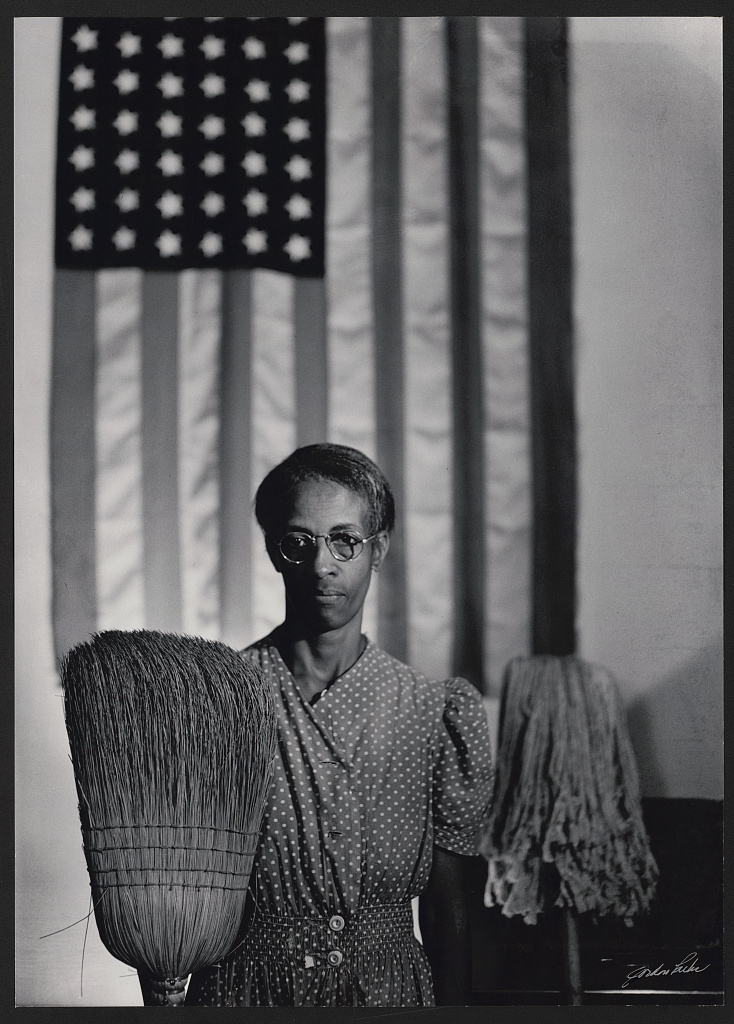
22Photographing injustice while weighing wartime duty
QUICK GIST A racist sheriff encounter and the treatment of Black soldiers deepen Parks’s commitment to document inequality. He considers photographing military aviators while worrying about his family.
DETAILED SUMMARY. With documentary work underway, Gordon sees how official status can protect him in situations where an ordinary Black traveler would face aggression. A sheriff questions him during a car journey, and the danger diminishes only after his professional credentials are explained. The United States is at war, and Parks wants to record Black service members who fight for a country that denies them full equality. His interest turns toward aviation units associated with the Tuskegee Airmen. Yet Sally’s pregnancy makes travel dangerous in a different sense: he must decide whether public ambition justifies leaving family behind. The narrative pauses on competing obligations rather than presenting courage as effortless.
WHY IT MATTERS. The chapter develops the wartime paradox: Black citizens are asked to defend democracy abroad while confronting discrimination at home.
FIND WITH CTRL+F: sheriff; FSA credentials; World War II; Sally pregnant; Selfridge Field; Black pilots; Tuskegee Airmen
Further analysis
In the passage
The transition to war photography broadens the story's scale from poverty and local segregation to a country defending freedom abroad. Parks considers photographing Black soldiers because their work challenges racist assumptions about patriotism, competence, and national belonging. At the same time, the prospect of war raises serious ethical questions. An overseas assignment could be dangerous, and professional ambition cannot erase the consequences for Sally and the family. The chapter's confrontation with local law enforcement also shows how insecure his status can remain. He may carry government credentials or work with respected colleagues, but authority figures can still question and threaten him in ways shaped by race. The narrative asks whether the ability to document injustice creates an obligation to accept personal risk to do so.
Themes in focus
The recurring contrast is liberty as a national slogan versus liberty as an everyday experience. Military service makes the contradiction visible: Black Americans are asked to help defeat racist authoritarianism overseas while facing racist treatment at home. Another important theme is the difference between courage and recklessness. Parks's decision involves potential public value but also a real cost to people who rely on him. The first-person memoir allows him to display uncertainty rather than rewriting his history as a chain of confident decisions.
For a class discussion
Chapter 22 connects Parks's photographic career with World War II. He wants to document Black military service, even though traveling for the assignment creates risks and family concerns. The chapter highlights the contradiction between the nation's stated defense of freedom and the discrimination Black Americans still experience.
Why it matters later
The next two chapters test whether the government is willing to allow Black pilots to receive the public recognition Parks wants to provide. Career ambition becomes inseparable from the question of whose service is seen and recorded.
Study prompt: Explain this chapter’s conflict, name one concrete scene or person, then show how it prepares Gordon’s eventual use of the camera.
23Selfridge Field, the Black pilots, and losses in training
QUICK GIST Parks documents Black military pilots, builds friendships, and witnesses the danger of aviation as racial conflict surrounds them.
DETAILED SUMMARY. At Selfridge Field, Gordon meets officers and airmen connected to the segregated military flying program, including Colonel Benjamin O. Davis Jr. These men possess extraordinary discipline and skill, yet outside the base they remain exposed to racist treatment. Parks gains insight into training, flight, and the group’s anticipation of deployment. Fatal accidents and news of deaths bring grief into what began as an exciting assignment. Reports of racial unrest in Detroit sharpen the contradiction between the courage of Black aviators and the hostility that greets them at home. His work can preserve their stories but cannot remove the risks of flight or prejudice.
WHY IT MATTERS. The chapter joins courage with vulnerability. Military competence undermines racist assumptions, but Parks does not portray sacrifice as guaranteed to produce justice.
FIND WITH CTRL+F: Selfridge Field; Benjamin O Davis Jr; 99th Fighter Squadron; 332nd; pilots; aircraft accident; Detroit
Further analysis
In the passage
At Selfridge Field, the Black pilots' training offers Parks a subject combining technical ability, discipline, community, and serious danger. The men are not merely illustrations of a political argument; they are individuals with friendships, ambitions, fears, and the possibility of injury or death. That complexity makes the documentary task important. The pilots' professional achievements directly contradict stereotypes suggesting they are less capable, but the racism around them does not disappear because of their skill. Accounts of accidents and losses prevent the story from treating military aviation as a glamorous spectacle. The training environment demands courage while exposing participants to real technical hazards. Parks's presence with a camera connects his own developing vocation to the need to document people whose contribution might otherwise be minimized.
Themes in focus
Flight could symbolize freedom, but the chapter deliberately complicates that symbolism. Pilots can take aircraft into the sky while remaining constrained by segregation on the ground. This difference between physical ability and political equality is a strong example of irony. Friendship and group pride add an emotional dimension to the documentary purpose. Remember to distinguish the broader term “Tuskegee Airmen,” used for the Black military aviation program, from the precise unit names and personnel Parks mentions in specific episodes; different historical sources may use squadron and group terminology differently.
For a class discussion
The Black pilots at Selfridge Field show competence, dedication, and courage while facing racial discrimination. Training accidents reveal the danger of their work. Parks wants to photograph them because their lives and accomplishments challenge racist beliefs and deserve public recognition. The chapter connects photography with the struggle over who gets represented in American history.
Why it matters later
The denial of Parks's overseas travel in the final chapter becomes painful because the reader has seen the people and stories he hopes to follow. Bureaucratic obstacles do not just inconvenience his career; they threaten to leave an important narrative less fully documented.
Study prompt: Explain this chapter’s conflict, name one concrete scene or person, then show how it prepares Gordon’s eventual use of the camera.
24Denied overseas travel; the final choice of weapons
QUICK GIST Delays and restrictions prevent Parks from accompanying the pilots overseas. Segregation on public transportation makes him confront the meaning of the country’s war for freedom.
DETAILED SUMMARY. When the pilots prepare for overseas deployment, Gordon’s travel authorization repeatedly fails. He moves through offices, military facilities, and transport routes trying to correct paperwork, and the pattern makes him suspect that broader racial prejudice is involved. On a bus he and Black servicemen resist an order to move to the rear; at a ferry terminal the separate lines for Black and white travelers reveal segregation in unmistakable physical form. He cannot join the men as planned and must return without the photographs he hoped to make. The memoir closes not with total professional victory but with a deliberate understanding of what his lifelong struggle requires: dignity, persistence, human sympathy, and art capable of exposing wrongs.
WHY IT MATTERS. The ending matters because the “choice” is not a single perfect decision. It is a continuing commitment made despite anger, setbacks, and incomplete justice.
FIND WITH CTRL+F: Pentagon; travel papers; deployment; segregated bus; whites only; colored; ferry; Newport News; conclusion
Further analysis
In the passage
The conclusion refuses to provide a neat victory. Parks has skills, institutional contacts, and a compelling reason to travel with the pilots, yet problems with his papers prevent him from going overseas. The bus and ferry encounters make clear that discrimination persists in supposedly routine public systems. The humiliation of Black servicemen is especially striking because the nation is at war while speaking the language of liberty. The resistance on the bus creates a small collective example of refusing an unjust order, but such moments do not dissolve the broader system. Parks's frustration at Newport News is therefore both personal and political: he has lost the assignment he wanted, and the obstacles reflect a pattern of unequal access and recognition. Returning from this disappointment, he reflects on the people who taught him dignity or showed him kindness. The ending measures progress not by the elimination of racism but by his decision to keep responding through purposeful work.
Themes in focus
To explain the title, compare three symbolic tools: the fist, the gun, and the camera. A fist or gun can produce an immediate confrontation; a camera can produce testimony that survives and circulates. Parks's decision is not presented as passive. Documentary photography requires courage, judgment, persistence, and sometimes confrontation with powerful institutions. The ending is also circular: the mother whose values shaped the young man in the beginning remains present in his adult moral choices. The plot ends, but the social struggle continues.
For a class discussion
In the final chapter, Gordon tries to accompany Black military pilots overseas but is blocked by problems with his travel authorization. Segregation on public transportation reinforces the racism the pilots and Parks face. Although he is deeply frustrated, the memoir ends with his continuing commitment to oppose prejudice through the abilities he has developed, especially photography. The ending is determined rather than completely happy.
Connection to the opening
At the start, Parks is a vulnerable teenager who often has little control over the way others treat him. By the end, he has developed a tool and a public purpose. He still cannot control every outcome, but he can decide what to witness, how to represent it, and how he will answer injustice over the long term.
Study prompt: Explain this chapter’s conflict, name one concrete scene or person, then show how it prepares Gordon’s eventual use of the camera.
People & relationships
Gordon Parks / narrator
Black Kansas-born youth who becomes a musician, worker, father, and documentary photographer. His inner conflict between rage and purposeful creativity drives the memoir.
Search / location: All chapters.
Sarah Parks / “Momma”
His mother; a source of dignity, love, persistence, moral guidance, and later grief. Her teaching functions as an internal compass after her death.
Search / location: Opening, recurring recollections.
His father / “Poppa”
A less emotionally accessible parent in the memoir; represents family ties strained by loss and poverty.
Search / location: Early chapters and Depression sequence.
Maggie Lee
The sister Parks initially joins in St. Paul. The shelter she provides is complicated by conflict within her household.
Search / location: Chapter 1; later family episodes.
Sally Alvis
A central love relationship and family partner. Courtship, marriage, parenting, financial arguments, and separations complicate Gordon’s career decisions.
Search / location: Chapters 6, 9, 11, 15–22.
Butch / Gordon Parks Jr.
His son; health and childcare needs turn the abstract desire for stability into immediate personal responsibility.
Search / location: Chapters 15–19.
Casamala
A woman Gordon meets while playing piano in the nightlife economy; her vulnerability introduces coercion and exploitation.
Search / location: Chapter 2.
George Berry
Classmate who notices Gordon’s hunger and isolation and offers hospitality without demanding an explanation.
Search / location: Chapter 4.
Bill Hunter
Friend associated with Harlem and the CCC; models practical loyalty, humor, and mediation in the camp.
Search / location: Chapters 13–14.
W. C. Handy and his circle
Musical contacts whom Parks approaches in Harlem, representing the possibility of support amid rejection.
Search / location: Chapter 13.
Marva Louis
Wife of boxer Joe Louis, an early supporter of Parks’s photographic work who encourages him to expand opportunities in Chicago.
Search / location: Chapter 19; foundation chronology.
Charles White / Ben Shahn
Artists whose socially engaged work offers models for connecting art and public criticism.
Search / location: Chapters 19–20.
Roy Stryker
Head of the FSA photography unit who pushes Parks to observe injustice, study images, and make documentary work more effective.
Search / location: Chapter 21 and later.
Ella Watson
Washington government custodian and subject of Parks’s American Gothic photo series; a distinct person, not merely an illustration of a social problem.
Search / location: Chapter 21; 1942 photographs.
Benjamin O. Davis Jr. and Black pilots
Military personnel whose competence and sacrifices expose the injustice of segregation and unequal treatment.
Search / location: Chapters 22–24.
Relationship patterns worth mentioning
The mother-son relationship structures the moral argument; Gordon’s grief is a source of vulnerability, and the remembered values are a source of resistance. The marriage with Sally introduces the conflict between adventurous ambition and practical duty. Friendships such as those with George Berry and Bill Hunter reveal forms of support beyond family. Professional mentors and peers—including Marva Louis, Chicago artists, and Roy Stryker—help turn individual talent into public work. By contrast, hostile employers, racist officials, and abusive supervisors show how a person’s agency can be narrowed by other people’s control over jobs, housing, wages, or permission.
Themes & evidence
Racism and institutional exclusion
Racist treatment is not restricted to individual insults. It affects job advertisements, public entrances, restaurants, travel, policing, housing, and wartime rules. Parks’s experiences are connected across regions: moving north or entering the federal workplace does not magically remove unequal treatment. The memoir thus challenges a simple story in which prejudice belongs only to one part of the United States.
Scene anchors. Chapter 1 family memories; Chapter 5 Bemidji café; Chapter 10 assault and jail; Chapter 12 discriminatory employment; Chapter 21 Washington service refusal; Chapter 24 buses and ferries.
Poverty as a constraint on choice
Gordon’s story contains many decisions, but the options available are frequently shaped by hunger, shelter, racism, and lack of reliable work. He may choose to leave town, take a bad job, or accept help, yet these decisions take place within economic scarcity. An effective analysis avoids saying that suffering is simply an individual test of character: the Great Depression and discrimination are active causes.
Scene anchors. Chapter 3 dead pigeon; Chapter 7 freight travel; Chapter 8 unpaid wages; Chapter 12 Harlem room; Chapter 13 CCC; Chapters 16–20 career insecurity.
Violence versus the artistic “weapon”
Weapons begin as literal possibilities: fights, threats, and a gun can force a result in the moment. But such actions also generate danger, fear, and the risk that hatred will define him. Music and photography become alternatives because they communicate emotional truth and can build a livelihood. The camera is not a weapon of physical harm. It is a tool for visibility, criticism, and protest.
Scene anchors. Chapter 5 fight; Chapter 8 pistol; Chapter 10 anger; Chapter 17 first camera; Chapter 21 FSA photographs; Chapter 24 final resolve.
Mother, memory, and moral inheritance
Parks’s mother is absent from much of the action because she dies at the beginning, yet her teachings remain central. His choices are frequently measured against the kind of person she hoped he would become. That influence does not turn him into a flawless hero; it gives him a standard to return to after fear, hatred, or mistakes.
Scene anchors. Chapter 1 mother’s death; Chapters 5, 10 and 24 moments of moral reflection.
Education and self-invention
Formal schooling matters, but so do unofficial sources of learning: books encountered through work, hotel conversations, musicians, railway coworkers, museums, and photography practice. Parks’s path is not a straight credential-to-career story. He learns by working, observing, taking risks, making technical errors, and being mentored.
Scene anchors. Chapters 3–6 high school; Chapters 9–11 music; Chapter 16 reading and trains; Chapters 17 and 19 camera practice; Chapter 21 Stryker.
Dignity and the refusal to be defined by others
Parks dislikes insults not merely because they hurt his feelings but because they imply that his abilities and humanity can be judged by skin color. His acts of resistance range from an angry outburst to a deliberate refusal to accept segregation. The memoir asks whether dignity is preserved by striking back, by enduring, or by exposing an unjust rule.
Scene anchors. Chapter 8 wages; Chapter 10 jail; Chapter 21 cafeteria; Chapter 24 bus resistance.
Family obligations versus creative ambition
Sally, the children, the loss of work, and family tensions make the story more complex than an uncomplicated triumph of artistic self-expression. Risking a salary for photography can have costs for people who rely on him. The narrative frequently sets excitement about travel or projects beside anxiety about being a good partner and father.
Scene anchors. Chapter 6 courtship; Chapters 15–18 marriage and Butch; Chapter 19 decision to expand career; Chapter 22 pregnancy during wartime.
Images, empathy, and representation
Parks’s documentary method is strongest when he portrays individuals not as anonymous symbols of poverty but as people with their own responsibilities, relationships, and dignity. The 1942 Ella Watson series illustrates the difference between reducing a subject to suffering and documenting a full human life. Her flag portrait criticizes inequality, while images of home life broaden our view of her.
Scene anchors. Chapter 20 South Side; Chapter 21 Ella Watson; external reference: Library of Congress photo essay.
Ambivalence rather than a perfect success story
A superficial interpretation says Parks overcomes every obstacle through hard work. A more thoughtful one notes the temporary and incomplete nature of many victories. He earns money, then loses the job; receives a creative opportunity, then encounters racism; gains an assignment, then is denied travel. His achievement lies partly in continuing to choose a direction without believing the social problem has vanished.
Scene anchors. Chapters 2, 7, 10, 17, 20 and 24.
A thesis that unifies the themes
In A Choice of Weapons, Gordon Parks shows that racism and poverty repeatedly pressure him toward anger and retaliation, but the influence of his mother and his development as an artist help him transform personal suffering into photography that exposes injustice and defends human dignity.
A stronger, more nuanced thesis
Although Parks’s perseverance helps him become a successful photographer, his memoir does not suggest that individual talent can erase systemic racism. Instead, it shows how education, relationships, and artistic practice allow him to resist dehumanization while acknowledging that poverty, discrimination, and the nation’s contradictions persist.
Key scenes
1928 death and departure [Ch 1]
The mother dies; Gordon leaves Kansas for Minnesota. Interpretation: Loss of security, moral inheritance, sudden adulthood.
Conflict at Maggie Lee’s home [Ch 1]
A family argument leaves Gordon without a secure place to live. Interpretation: Belonging is conditional; home and shelter are not interchangeable.
Christmas Eve job collapse [Ch 2]
Police activity around his employer coincides with a public season of celebration. Interpretation: Juxtaposition of festive abundance and personal insecurity.
Piano work and Casamala [Ch 2]
Gordon earns money in a risky nightlife world and meets a vulnerable woman. Interpretation: Art, exploitation, and unequal options coexist.
Dead pigeon [Ch 3]
Severe hunger leads Gordon to eat a pigeon. Interpretation: Concrete detail prevents the romanticizing of poverty.
School caretaker’s food [Ch 3]
A caretaker gives biscuits and coffee to the hungry student. Interpretation: Small kindness can carry enormous weight in an unequal world.
George Berry’s hospitality [Ch 4]
A classmate sees through Gordon’s appearance of normalcy. Interpretation: Friendship punctures isolation without erasing shame.
Bemidji café confrontation [Ch 5]
A failed piano job is followed by a racist encounter and arrest. Interpretation: Violence is tempting when dignity is under attack.
Minnesota Club books [Ch 6]
Serving wealthy people exposes Parks to reading and new worlds. Interpretation: Observation and informal education are routes to self-invention.
October 1929 crash [Ch 6]
Unemployment replaces a period of tentative improvement. Interpretation: Individual effort cannot fully control an economic disaster.
Winter freight ride [Ch 7]
Gordon and Jess suffer cold and frostbite traveling toward Chicago. Interpretation: Survival requires extraordinary risks when ordinary routes fail.
Hotel Southland gun [Ch 8]
After wages are withheld and he is assaulted, a pistol enters the conflict. Interpretation: Literal weapon versus later symbolic weapon.
Health collapse in sports [Ch 9]
Physical strain and malnutrition interrupt school and work. Interpretation: The body limits the heroic idea of endless endurance.
“No Love” recognized [Ch 10]
A composition attracts the attention of working musicians. Interpretation: Music gives a constructive identity and hope.
Racial assault / jail [Ch 10]
Racist attackers provoke Gordon and his bitterness grows. Interpretation: Anger is a consequence of injustice, not an unexplained flaw.
Orchestra proposal to Sally [Ch 11]
Marriage hopes develop alongside the chance to tour. Interpretation: Love, artistic ambition, and risk begin to compete.
Harlem vermin-filled room [Ch 12]
New York fails to deliver the welcome Gordon expects. Interpretation: Disillusionment; place does not guarantee opportunity.
Charlie’s deliveries [Ch 12]
Money pressure leads Gordon toward suspect work. Interpretation: A constrained choice is not the same as free choice.
W. C. Handy connection [Ch 13]
Musical contacts show him hospitality during desperate days. Interpretation: Creative networks can be materially protective.
CCC camp tensions [Ch 14]
Bill Hunter builds friendships amid conflict and tragedy. Interpretation: Strength can mean solidarity rather than domination.
Butch’s asthma [Ch 15]
Parents struggle with the health of their child. Interpretation: Responsibilities make the need for economic stability concrete.
Railroad dining car [Ch 16]
Service work exposes him to coworkers and cross-country travel. Interpretation: Mobility, hierarchy, discipline, and observational training.
Used camera purchase [Ch 17]
A camera bought in Seattle changes what he wants to do with his life. Interpretation: The central symbolic transition toward photography.
Puget Sound mishap [Ch 17]
He falls into the water while experimenting with bird photography. Interpretation: Trial, error, humor, and the reality of self-teaching.
Touring basketball [Ch 18]
Temporary athletic employment offers income amid family strife. Interpretation: Many skills do not guarantee lasting security.
Fashion double exposure [Ch 19]
A technical mistake is salvaged through creativity. Interpretation: Adaptation and presentation become professional skills.
Marva Louis support [Ch 19]
A better-connected patron recognizes the potential in his work. Interpretation: Mentorship and opportunity matter alongside talent.
Chicago South Side photographs [Ch 20]
Artistic focus widens from commercial portraiture to urban inequality. Interpretation: Empathy becomes an aesthetic and political method.
Rosenwald fellowship [Ch 20]
Funding makes sustained photographic research possible. Interpretation: Support structures can turn vocation into public contribution.
Washington restaurant refusal [Ch 21]
The capital refuses ordinary service to a federal photographer. Interpretation: The nation contradicts its declared ideals.
Ella Watson before U.S. flag [Ch 21]
A worker is photographed with cleaning tools under a democratic symbol. Interpretation: Visual irony, dignity, national criticism.
Selfridge Field pilots [Ch 23]
Black aviators train under danger while segregation persists. Interpretation: Competence and patriotic service coexist with denied equality.
Bus defiance [Ch 24]
Black passengers resist an order to move back. Interpretation: Dignity can be defended collectively without assault.
Denied deployment [Ch 24]
Permission problems prevent Gordon from recording the pilots overseas. Interpretation: The conclusion rejects false closure; resistance must continue.
Literary craft
First-person retrospective voice
The “I” makes social history personal, but the mature author can also judge his younger emotions. Consider the gap between what Gordon felt at the time and what the older narrator wants readers to learn.
Concrete sensory imagery
Cold rooms, dirty hotels, hunger, noisy clubs, and cramped train cars produce a bodily understanding of inequality. In an essay, describe the physical detail and explain its social meaning.
Recurring contrasts
Christmas versus solitude; an affluent club versus a hungry worker; an energetic Harlem street versus blocked jobs; a U.S. flag versus segregation; proud pilots versus discriminatory treatment.
Escalation and reversal
Many apparent successes are followed by disappointment: a job ad leads nowhere, a song succeeds before an assault, a camera brings praise before firing, an overseas assignment ends in rejection. The pattern resists a simple “always upward” story.
Symbolic objects
The pistol stands for immediate coercion and danger; the camera for observation and public testimony; books for a world beyond daily work; the train for movement without guaranteed freedom; the flag for the nation’s promises.
Dialogue and reported insults
Conversations can expose unequal power: employer versus worker, official versus traveler, authority figure versus young man. Avoid claiming a passage is a word-for-word quotation without verifying it in the text.
Shifts in tone
Reflective grief, fear, grim humor, lyrical appreciation of music, fierce anger, and patient observation all appear. Tone changes are often more revealing than a summary of “sad” or “hopeful.”
Photojournalistic composition
Parks pays attention to what an image includes and what the placement of objects suggests. American Gothic uses a person, tools of labor, and a flag in one composition, allowing the viewer to recognize a political argument visually.
Historical allusion and documentary context
The Depression, New Deal programs, American segregation, and WWII are not interchangeable background facts. Each changes the opportunities available at a particular stage.
How to analyze “American Gothic” responsibly
The 1942 photograph depicts Ella Watson, a government cleaning worker, facing the camera with mop and broom in front of an American flag. Parks arranged the image with a recognizable reference to Grant Wood’s American Gothic. The flag invokes citizenship and the country’s principles. The tools make her necessary labor visible. Her direct presence resists treating Black workers as invisible. The irony lies in the distance between the symbol of equal national belonging and the segregation Parks and Watson experienced. This contextual photograph helps explain the memoir’s artistic philosophy; do not state that every photo in the series is reproduced in every edition of the book.
What the photograph is not saying
It should not be summarized as “Ella Watson was poor, so Parks took a sad photo.” That flattens a real person into a stereotype. The broader photographic series includes her relationships, home life, and daily responsibilities, not only one emblematic image. A better interpretation is that Parks recognizes her dignity while criticizing the structure that undervalues her work and opportunities.
Language & context
Period accounts of racial injustice contain language that must be understood in context. Terms like “Negro” and “colored” appear in historical speech and bureaucratic descriptions; the second was used on segregated signs, while “whites only” explicitly marked exclusion. These expressions were not socially neutral in every context. A hostile character’s slur, an institution’s label, and a Black writer’s own period vocabulary have different purposes. This guide does not invent a list of slurs allegedly spoken in a particular scene.
Memoir
A nonfiction first-person account of events in the author’s own life, written from a later vantage point.
Autobiography
A life narrative written by its subject; this book is also a memoir because it concentrates on formative years.
Narrator
The voice telling the story. Here it is Parks recounting his younger self.
Retrospective narration
The older storyteller looks back and can interpret what his younger self did not yet understand.
Motif
An element that returns and acquires meaning; cold, hunger, trains, weapons, and seeing are useful examples.
Symbol
An object or action with significance beyond its literal use; the camera, gun, American flag, and train can each be read symbolically.
Metaphor
Language describing one thing through another. The “weapon” is a metaphor for artistic resistance.
Juxtaposition
Placing contrasting scenes side by side, such as Christmas joy with homelessness, or democratic symbols with racist treatment.
Imagery
Sensory description that lets a reader imagine sights, smells, cold, hunger, and cramped rooms.
Tone
The narrator’s emotional attitude—often angry, reflective, compassionate, humorous, or unsentimental.
Diction
Word choices, including period-specific words for race and class and the differences between spoken insults and authorial narration.
Irony
A contradiction between expectation and reality; wartime democracy coexisting with segregation is a central example.
Foil
A contrasting figure or thing that clarifies another; the gun and camera work as contrasting types of power.
Agency
The ability to act or decide, always affected here by unequal resources and exclusion.
Great Depression
The prolonged U.S. economic crisis beginning in 1929 that produced unemployment, hunger, and homelessness.
New Deal
Federal economic programs under Franklin D. Roosevelt intended to provide relief, recovery, and reform.
CCC / Civilian Conservation Corps
A New Deal work program for young men, providing employment on conservation projects.
FSA / Farm Security Administration
New Deal-era agency whose documentary photography unit recorded American working and living conditions.
OWI / Office of War Information
Wartime U.S. government agency that employed photographers and public-information workers.
Rosenwald Fellowship
Grant support associated with the Julius Rosenwald Fund that helped Parks pursue documentary photography.
Jim Crow
Laws and customs enforcing racial segregation and unequal treatment, especially but not exclusively in the South.
Harlem
New York neighborhood renowned for Black cultural life, while also experiencing poverty during the Depression.
Tuskegee Airmen
Black U.S. military aviators and their support personnel who served in the segregated World War II armed forces.
“Negro,” “colored,” “whites only”
Period language used historically in racial labeling and segregation; explain its context instead of using it as a neutral present-day description.
Racial slur
Derogatory language targeting race. In discussing the memoir, distinguish slurs spoken by hostile characters from the author’s own point of view. Do not invent exact quotations.
How to answer a question about the N-word or other racial insults
A precise answer would say that Parks recounts anti-Black humiliation and the language of segregation to reveal the cruelty and normalized power behind it. Explain who uses the term, whom it targets, whether it is spoken in anger or printed as a rule, and how Gordon reacts. If the assignment requires an exact slur or quotation, check the actual passage in your edition before copying it. Do not attribute a word to Parks’s narration if it belongs to a hostile person’s speech.
Classroom answers
These are model starting points intended for learning and adaptation. They are paraphrases, not quotations and not guaranteed to match every teacher’s chapter wording.
What is the book about?
It is Gordon Parks’s account of growing up and surviving as a young Black man amid the Great Depression and widespread racism. It follows his movement through difficult jobs, music, family life, and photography, showing how he gradually discovers art as a way to oppose injustice.
Why is the title A Choice of Weapons?
“Weapon” refers to the different ways someone can respond to oppression. Parks is tempted by fists, threats, and hatred, but comes to see photography, words, dignity, and persistent work as more constructive weapons against racism and poverty.
Is the book fiction?
No. It is an autobiographical memoir: Parks writes about experiences from his own life. Like any remembered narrative, it presents events through a later writer’s interpretation.
What is the main conflict?
Parks struggles against social forces such as poverty, racism, and job exclusion while fighting an internal conflict over how to react. His anger is understandable, but he must decide whether to let it control him or turn it into purpose.
What happens in the beginning?
After his mother dies in 1928, sixteen-year-old Gordon moves to St. Paul and tries to attend school while working. A conflict with his brother-in-law makes him homeless and begins years of unstable survival.
What happens in the middle?
He works in hospitality, music, and on trains, travels to Harlem, joins the CCC, marries, and becomes a father. Professional progress is repeatedly disrupted by unemployment, racism, family troubles, and anger.
What happens near the end?
He discovers photography, earns work in fashion and documentary photography, joins the FSA in Washington, and records segregation and ordinary Black life. He attempts to accompany Black pilots overseas but is blocked by travel authorization problems.
How does the story end?
The book closes with a frustrating wartime assignment rather than a simple victory: Parks cannot travel with the pilots, but his experiences reinforce his determination to fight discrimination using constructive methods.
How does Gordon change?
He begins as a teenager focused on immediate survival and often drawn toward retaliation. Over time he becomes a professional observer who understands that creative work can reveal injustice to people who did not witness it.
What does his mother teach him?
She models love, dignity, and hard work rather than hatred. Those values become an internal standard against which he measures his reactions to cruelty.
Why is his mother important after she dies?
The emotional absence is permanent, but her values recur in his memories whenever he weighs anger against self-control. She is therefore both a remembered person and a continuing influence on his decisions.
Why does Gordon have so many jobs?
He needs immediate income, especially during the Depression and while supporting his family. Discrimination and insecure employment frequently prevent one position from becoming a lasting career.
Does Parks ever use violence?
Yes. The memoir includes fights and a confrontation involving a gun. His final “choice” is not based on never feeling anger or making mistakes; it grows out of those experiences.
What is significant about the dead pigeon?
It makes the severity of his hunger impossible to romanticize. The image also contrasts the ordinary expectations of a schoolboy with the extraordinary conditions under which Gordon tries to study.
What does the cold symbolize?
Cold is a physical danger during homelessness and freight-train travel. It can also represent emotional isolation and society’s failure to offer protection.
Why are trains important?
They are a means of escape, a source of employment, and a way for Parks to see more of the country. Yet mobility alone cannot remove racism or economic insecurity.
Why does he become interested in photography?
He encounters visual art and documentary images that make social conditions visible. Once he buys a used camera, he discovers a form of expression that joins his eye for detail with his desire to tell meaningful stories.
What is special about his first camera?
He buys a secondhand Voigtländer Brilliant in Seattle and learns through experimentation. The modest purchase is important because it becomes a professional and moral turning point.
How is music important?
Music offers income, identity, and a way to express emotions before photography becomes his profession. It also introduces him to artistic communities and demonstrates that he can create rather than only react.
What was the CCC?
The Civilian Conservation Corps was a New Deal work program that provided jobs in conservation-related projects. For Parks, it offers temporary structure, work, friendship, and relief from unemployment.
Why is Washington, D.C., important?
It is the nation’s political capital, yet Parks finds segregation there. That contradiction gives his early FSA photography a clear argument about the gap between American ideals and actual conditions.
Who was Roy Stryker?
He supervised the FSA photography unit and encouraged Parks to use precise observation and images to communicate experiences of injustice. His guidance helps Parks become a more deliberate documentary storyteller.
Who was Ella Watson?
She was a government custodian whom Parks photographed in Washington in 1942. He portrays her before an American flag with a mop and broom and also documents aspects of her everyday life.
What is the meaning of American Gothic?
The photograph places Ella Watson, her cleaning tools, and a large U.S. flag in one frame. It draws attention to a citizen whose labor serves the nation while racial discrimination limits her rights and opportunities.
Is American Gothic itself a chapter?
It is a famous photograph connected to Parks’s early FSA work and a useful way to understand that part of the memoir. The photo’s later title should not be mistaken for an independently verified printed chapter heading.
Why does Parks want to photograph Black pilots?
Their professional skill and service challenge racist stereotypes. He wants to document people defending democratic ideals even while facing unequal treatment in their own country.
Why is the ending not entirely happy?
Parks is denied the trip he wants to make, and segregation continues. The memoir values resolve and purpose without pretending one artist can instantly solve systemic injustice.
How is racism shown?
Through exclusion from work, housing, businesses, travel, and equitable treatment by authorities. The repeated incidents show that inequality is maintained by institutions and customs as well as individual prejudice.
How is poverty shown?
Through hunger, cold, unsafe housing, dead-end employment, unpaid wages, and desperate travel. Parks makes scarcity tangible rather than describing it only as an abstract economic problem.
Why doesn’t Gordon simply ignore people who insult him?
Repeated insults are tied to material exclusion and threat. The issue is not hurt feelings alone: his safety, jobs, dignity, and freedom are often at stake.
What is the tone of the memoir?
It shifts among anger, fear, dark humor, compassion, and reflection. That range helps prevent the narrator from sounding either permanently defeated or unrealistically triumphant.
What narrative point of view is used?
First person: Parks tells his own experiences using “I.” Because he writes retrospectively, there is often a difference between his youthful reactions and his later interpretation.
How does Parks use vivid descriptions?
Descriptions of winter cold, vermin-filled rooms, noisy workplaces, and crowded streets put readers close to his physical conditions. Such scenes make injustice concrete.
Where is irony used?
The nation advertises freedom while segregating public spaces and military personnel. The flag behind a Black government worker also makes that contradiction visible.
Does the book claim hard work alone ends racism?
No. Parks values effort but repeatedly encounters barriers he cannot control. A strong interpretation recognizes both his personal agency and the larger systems shaping his options.
What do the gun and camera represent?
The gun offers immediate coercive force and the danger of escalating violence. The camera can create a durable record, challenge assumptions, and attract public attention without injuring a subject.
How would you describe Parks as a character?
Resourceful, proud, observant, ambitious, and sometimes impulsive. His contradictions make the memoir more persuasive: he reflects on harmful reactions as well as productive ones.
What is a useful personal response to the book?
One striking point is how often basic necessities stand between Parks and an education or career. His decision to use photography as a form of criticism is convincing because the memoir first shows how easily anger could have consumed him.
What can someone criticize about the memoir?
Because it follows an exceptional individual, readers might overgeneralize the possibility of escape through talent and persistence. The book itself supplies evidence that countless people faced barriers they could not personally overcome.
What was the Great Depression’s role?
It made jobs and housing scarce and undermined periods of stability. Parks experienced the crisis through both direct unemployment and the dangerous choices required to find food or shelter.
What are the three strongest themes?
Racial injustice, the effects of poverty, and the struggle to choose creative resistance instead of destructive anger. Each theme develops through repeated episodes rather than appearing only at the end.
How would you summarize the first quarter?
A mother’s death pushes Parks into independent survival. St. Paul, Minneapolis nightlife, hunger, homelessness, school, racism, and the economic crash show how vulnerable and resourceful he becomes.
How would you summarize the second quarter?
The Depression sends Parks through dangerous work, freight travel, music, and New York. He experiences violent injustice while trying to preserve opportunities for art, love, and education.
How would you summarize the third quarter?
The CCC, family life, railroad jobs, and early photography gradually reshape Parks’s future. A used camera opens an artistic path, even as marital tension and job loss prevent easy progress.
How would you summarize the fourth quarter?
He builds a photographic career in Chicago and Washington, uses images to document exclusion, and records Black military service. Segregation and denied overseas travel leave the struggle unresolved but sharpen his purpose.
If asked whether the book is inspirational, what is a nuanced answer?
It is inspirational because Parks persists and discovers meaningful work. Its greater value is that it does not hide the severity of the injustices he faces or portray success as the same thing as the end of discrimination.
Ready answer format for ANY chapter
“In this chapter, Parks faces [specific problem] while trying to [his immediate goal]. A key scene is [one real event], which shows [what the event reveals about racism, poverty, family, or art]. The chapter matters because it moves him from [earlier state] toward [later realization], developing the larger theme of choosing how to respond to injustice.”
One-sentence answer formula for EVERY chapter
Chapter 1: After his mother dies, Parks moves from Kansas to St. Paul. He tries to attend school and work, but conflict with his brother-in-law forces him out of the household. The important idea is: Loss of a parent creates the central question: which values can guide Gordon when no adult can reliably protect him? His mother remains a moral presence even after death.
Chapter 2: Parks loses a precarious job around Christmas, then finds paid piano work in Minneapolis nightlife. A relationship with Casamala and a violent episode expose him to exploitation and danger. The important idea is: Music is an early nonviolent instrument of survival, but the chapter warns that not every opportunity is safe. The contrast between Christmas celebration and isolation reinforces social exclusion.
Chapter 3: In a cheap rooming house Gordon encounters Lottie and Jenny, experiences conflict, and becomes desperate for food. He continues studying even while facing humiliation and hunger. The important idea is: The pigeon is an extreme image of deprivation. His continuing interest in school establishes education as a choice that resists the narrowing effects of poverty.
Chapter 4: Parks desperately wants an education but cannot reliably obtain shelter, food, or work. He uses music and invented stories to shield his pride while a classmate offers help. The important idea is: Parks shows how pride can preserve dignity while also making help harder to accept. Art converts private feeling into expression rather than leaving it as resentment.
Chapter 5: A promising piano advertisement leads Gordon to Bemidji, only for the job to be gone. A racist confrontation in a café produces violence and an arrest. The important idea is: This is one of the clearest early examples of the title’s conflict between retaliation and self-control. The book does not pretend anger is irrational; it asks what anger should become.
Chapter 6: A period of stability arrives with work at the Minnesota Club, renewed family contact, reading, and romance with Sally Alvis. The stock-market crash then disrupts that progress. The important idea is: The chapter broadens the explanation of hardship: even diligence cannot fully protect a worker from a collapsing economy. Reading and romantic hope help him imagine a life beyond menial work.
Chapter 7: Joblessness pushes Parks toward Chicago. He travels with Jess Turner in brutal cold and confronts frostbite, unsafe transport, racial exclusion, and grim lodging. The important idea is: Changing cities does not erase structural poverty or racism. The scene of the freight car reveals the physical risks people take when ordinary jobs and housing vanish.
Chapter 8: Gordon works in filthy conditions at a Chicago hotel, is attacked while demanding wages, and confronts the employer with a gun before escaping. The important idea is: This chapter offers a literal weapon as a foil to the camera he will later choose. The gun can compel one immediate result, but it does not offer a durable solution to injustice.
Chapter 9: Following the Chicago experience, Gordon returns to family and work. He pursues music and education but overwork and poor nutrition damage his health. The important idea is: Talent and drive do not eliminate bodily limits. The relationship between health, schooling, and work illustrates poverty as a connected system rather than a single shortage of money.
Chapter 10: Parks gets a hotel busboy job that places him near musicians. His song receives attention, but a racial assault and time in jail fill him with anger. The important idea is: The title’s moral conflict intensifies: a creative success creates a possible future, while racial violence threatens to redirect all his energy toward revenge.
Chapter 11: Gordon joins an orchestra tour, becomes engaged to Sally, and sees both the excitement and instability of performing life before the band heads toward New York. The important idea is: Artistic mobility carries risk as well as freedom. Hope persists even when professional opportunity is poorly organized and racial hierarchy remains visible.
Chapter 12: The band disbands after arriving in New York. Parks finds a poor room in Harlem, searches unsuccessfully for work, and becomes entangled in suspicious deliveries. The important idea is: Parks contrasts the mythology of Harlem’s opportunities with the lived reality of the Depression. The chapter also explores the difference between a choice freely made and a choice forced by poverty.
Chapter 13: Evicted and nearly destitute, Parks meets people connected to music, finds temporary support, and joins the Civilian Conservation Corps with Bill Hunter. The important idea is: Community support can interrupt desperation without eliminating the economic crisis. The CCC connects Parks’s individual survival story to Roosevelt-era federal relief.
Chapter 14: At a CCC camp, Parks and Bill adapt to work discipline and clash with bullies. Bill helps build solidarity while accidents and illness expose how fragile camp life remains. The important idea is: Bill represents an alternative form of strength: mediation, social trust, and loyalty. Government employment makes survival more secure but does not eliminate danger.
Chapter 15: Gordon returns to Minneapolis, works in hospitality, writes more music, and becomes a father. His son Butch’s health problems test the household as Gordon seeks steadier income. The important idea is: The book shifts from personal survival to the obligations of a husband and father. Parks’s ambition is increasingly measured against what his loved ones need.
Chapter 16: Although railway service gives Gordon paid work, travel and hierarchy make him restless. He learns the profession but wants his life to become more creative. The important idea is: Employment and fulfillment are not the same thing. The railroad is both literal movement and a symbol of Gordon moving toward an as-yet-undefined vocation.
Chapter 17: In 1937 Parks discovers photography, buys a used camera in Seattle, and gets positive feedback on his pictures. Conflict at work and at home leads to losing his job and marital separation. The important idea is: Photography appears not as an instant escape but as a vocation discovered amid failure. The camera begins to offer a way to transform his view of the world into public evidence.
Chapter 18: Parks struggles to see his son and find work, then travels with the House of David basketball team. He continues photography while family and employment remain unstable. The important idea is: Parks is talented in several fields, but talent by itself does not create economic security. His parenting responsibilities complicate the story of individual freedom.
Chapter 19: Parks seeks professional photography assignments, makes an early technical mistake, recovers with ingenuity, and gains encouragement from Marva Louis. The important idea is: Parks develops both commercial craft and social purpose. His experience demonstrates that a photographer must be observant, resourceful, and willing to learn from mistakes.
Chapter 20: The family moves to Chicago as Parks builds a studio practice and documents South Side life. A Rosenwald fellowship makes federal documentary work possible. The important idea is: This is the decisive bridge from survival art to public art. The camera becomes a means of recognizing other people rather than only advancing Parks’s status.
Chapter 21: Parks joins the Farm Security Administration in Washington and experiences the capital’s segregation. Roy Stryker encourages him to convert his anger into documentary photographs. The important idea is: The flag photograph visually confronts American promises of equality with the labor and exclusion faced by an actual citizen. Stryker is a mentor, not the author of Parks’s perspective.
Chapter 22: A racist sheriff encounter and the treatment of Black soldiers deepen Parks’s commitment to document inequality. He considers photographing military aviators while worrying about his family. The important idea is: The chapter develops the wartime paradox: Black citizens are asked to defend democracy abroad while confronting discrimination at home.
Chapter 23: Parks documents Black military pilots, builds friendships, and witnesses the danger of aviation as racial conflict surrounds them. The important idea is: The chapter joins courage with vulnerability. Military competence undermines racist assumptions, but Parks does not portray sacrifice as guaranteed to produce justice.
Chapter 24: Delays and restrictions prevent Parks from accompanying the pilots overseas. Segregation on public transportation makes him confront the meaning of the country’s war for freedom. The important idea is: The ending matters because the “choice” is not a single perfect decision. It is a continuing commitment made despite anger, setbacks, and incomplete justice.
Quote & evidence guide
Verified short quotations or phrases
“No Love” A title of a composition by Parks, documented by the Gordon Parks Foundation chronology. This is a title, not a sentence to analyze as dialogue.
“American Gothic” Later title of the photograph of Ella Watson. Library of Congress and museums document the identification and its 1942 creation.
“I saw that the camera could be a weapon” A short excerpt of Parks’s later statement in an interview, reproduced in the Minnesota Historical Society publisher description. It is not automatically a quotation from a page of the memoir.
“whites only” / “colored” Historically documented wording of segregated transport signage described in the secondary chapter outline; check your edition for exact type, punctuation, and context.
Paraphrase evidence you can safely use without quotation marks
Quotation-check checklist
Places & chronology
1912. Gordon Parks is born in Fort Scott, Kansas.
1928. His mother dies; he moves to St. Paul and attempts schooling while working.
1929. Stock market crash leads into mass unemployment and broader Depression hardship.
1933. He arrives in New York with an orchestra that breaks up; he spends time in Harlem, enters the CCC, and marries Sally Alvis.
1934. Ends CCC period and returns to Minnesota.
1935–1936. Works on railroad and in service positions; son Gordon Jr. (“Butch”) is born.
December 1937. Visits Chicago Art Institute and purchases a used camera in Seattle during railway travel.
1938–1940. Continues varied work, basketball and early photography, then obtains local portraits and fashion assignments.
1940–1941. Marva Louis encourages him; Chicago South Side artistic and documentary work develops.
April–May 1942. Wins Rosenwald fellowship and travels to Washington for federal FSA photographic work.
August 1942. Photographs Ella Watson, including the portrait now called American Gothic.
1943. Works in wartime photography, including Black military aviators, and confronts travel-related barriers.
1949 — after the memoir’s main narrated period. Later becomes a Life staff photographer. This is background, not the closing scene of the book.
1966. A Choice of Weapons is published by Harper & Row.
Place index
Fort Scott, Kansas
Childhood, family, mother’s values, early racial hostility.
St. Paul / Minneapolis, Minnesota
School, homelessness, first jobs, piano work, marriage, early camera experiments.
Bemidji, Minnesota
Failed job attempt, café racism, and arrest.
Chicago, Illinois
Depression survival, railroad routes, artistic contacts, South Side photography.
Harlem / New York City
Orchestra collapse, desperate job search, musicians’ support, CCC decision.
Fort Dix / Camp Dix, New Jersey
CCC work, friendship, camp conflict and accidents.
Seattle / Puget Sound, Washington
First used camera, experimenting with photography.
Washington, D.C.
FSA, Roy Stryker, segregation and Ella Watson series.
Selfridge Field, Michigan
Black aviation personnel and war-correspondent assignment.
Newport News, Virginia
Embarkation, segregation, failed authorization for overseas travel.
Essay workshop
How does Parks make the title meaningful?
Argue that Parks moves from literal threats and retaliation to artistic resistance. Use the gun scene, his early camera purchase, and Ella Watson’s photograph. Explain that his anger remains real even after his methods change.
Evaluate the role of poverty in Parks’s early life.
Show how hunger, cold, homelessness, and job loss restrict his choices. Contrast an individual scene (dead pigeon) with a larger development (the Depression and New Deal programs). Explain the distinction between resilience and structural inequality.
How does Gordon’s view of racism change?
Describe early personal danger, repeated northern and urban prejudice, and the Washington federal experience. Argue that he grows from reacting to insults toward representing injustice in public images.
Why is photography different from music?
Both are creative forms and possible careers. Music first lets Parks express emotions and meet artists; photography eventually lets him publicly document other people’s lives and systemic injustice.
Explain an important symbol.
Choose the camera, gun, flag, cold, or train. Identify the literal object, then explain its recurring or contrasting meaning with two episodes.
Was Parks successful by the end?
Define success carefully. He has entered important photographic work and formed a mission, but the denied war assignment and ongoing segregation show that individual professional progress is not social equality.
What does the memoir teach about courage?
Distinguish fighting physically from risking hardship, refusing humiliation, caring for family, or documenting another person’s life. Use his bus resistance and the Black pilots.
Simple essay organizer
Evidence hierarchy: what to trust
Critical readings
These essays are original literary analysis rather than substitutes for the memoir’s wording. They can be used as argument models; verify any scene or quotation in your classroom edition before submitting an assignment.
The weapon metaphor: a choice between reaction and witness
The title is the best organizing principle for the memoir because the word “weapon” changes meaning as Gordon Parks develops. Early in the narrative, being harmed or humiliated may produce an immediate wish to fight. He learns to protect himself in settings where authority cannot always be trusted and where a worker can be assaulted or cheated without an obvious remedy. Physical action can feel like the only response that refuses to accept humiliation. Yet the memoir repeatedly demonstrates the limits of such action: a fight can result in arrest, a gun can create immediate danger, and anger can make a young man vulnerable to people with more social and institutional power. The opening chapters do not make those emotions seem foolish. They show why anger grows when the same person faces poverty and racism again and again.
The camera enters much later, and its significance is earned rather than announced. Parks first has to discover the practical side of photography: equipment, technique, composition, clients, and mistakes. At that stage it is not primarily a political symbol. It is a skill that might generate wages and perhaps allow greater independence. Only through the combination of his personal history, artistic communities, and federal work does he recognize the larger possibilities of a photographic image. He can make a viewer look at a person whom that viewer might otherwise ignore. He can bring evidence of labor, poverty, and discrimination into spaces where the subjects themselves have little access to power.
This transformation should not be described as Parks becoming incapable of anger. An interpretation of the memoir that claims he simply forgives everyone is unsupported and misses the continuing force of the final chapter. Segregation still frustrates him, and authorities still interfere with his work. What changes is his understanding of what anger can accomplish. He starts to convert it into images that preserve an encounter and circulate beyond the person who was initially insulted. A physical response focuses on the immediate opponent; a photograph can address an audience. Parks chooses a way to fight that matches his strengths and allows others to witness the same injustice.
The metaphor also has moral limits. A camera is not automatically just; a photographer can stereotype, exploit, or misrepresent a subject. Parks's evolving attention to people such as Ella Watson suggests that the ethical difference lies in the purpose of the image and in how fully he sees the person pictured. The best answer to a title question should therefore include the literal violence in his early life, the development of his artistic skill, the social purpose of later photographs, and the fact that the struggle remains unfinished.
Poverty is not a background condition; it organizes the plot
Poverty shapes the narrator's decisions so persistently that it functions almost like another character. At first Gordon's hopes sound familiar: he wants to go to school, find work, and live without depending on others. The difficulty is that every one of these goals requires a level of security he does not have. A job can end suddenly; finding a room can depend on a week's wages; studying can become difficult when he has not eaten. The reader must understand that the lack of money does more than make life uncomfortable. It reduces available choices and makes mistakes more costly.
The most striking details are physical. Winter travel is dangerous because he cannot buy an ordinary ticket. A dead pigeon becomes food because hunger has overcome usual standards. The school boiler room can provide warmth that home cannot. These scenes prevent readers from treating deprivation as simply a failure to budget or plan. They expose the uneven risks people are forced to accept when work is scarce. The emotional consequences are equally significant: Gordon conceals his troubles from classmates, reacts strongly to humiliation, and sometimes doubts that hard work can lead to safety.
The Great Depression widens the story beyond one household. Financial panic and unemployment cut across the country. Parks can be diligent and talented yet still lose a position, travel for a nonexistent opening, or work under demeaning conditions. A thoughtful reading does not use the Depression to excuse every behavior, but it recognizes that individual choice occurs inside an economic structure. His movement among cities illustrates the problem. Minneapolis, Chicago, and New York each offer possible work and each expose new restrictions. Constant motion is a measure of need, not proof of an adventurous personality alone.
The memoir's eventual career opportunities do not cancel this history. Instead they help explain why Parks wants photographs to challenge the comfortable belief that poverty is invisible or deserved. His images can ask viewers to notice the people who clean offices, live in neglected neighborhoods, or perform the labor on which national life depends. The strongest claim about poverty in the memoir is that it limits opportunity while also teaching Parks to recognize situations many privileged observers overlook. The book is inspiring, but it is not evidence that everyone who works hard can escape poverty by the same path.
Racism as personal attack and institutional structure
An important advantage of this memoir is that racism appears in several different forms. Gordon sometimes encounters an individual who uses an insult, threatens him, or denies him service. Those events are direct and easy to recognize. But the story also demonstrates more impersonal obstacles: hiring restrictions, segregated facilities, unequal opportunities, policing, and paperwork that can prevent a professional assignment. Each individual incident matters, yet the larger pattern is what gives the book its political force. Racism does not vanish when a particular person is kind or when Parks succeeds at a task.
This distinction is particularly important when studying the chapters that involve the federal government. Parks obtains a Rosenwald fellowship and works with photographers who support him. Such cooperation is real and should not be minimized. Nevertheless, Washington remains segregated in ways that expose the distance between American ideals and actual life. By placing Ella Watson before a national flag, Parks makes the contradiction visible without needing to construct a long written argument. The flag raises the question of who enjoys the rights and respect that the nation claims to represent. Her labor becomes evidence of a contribution to American life that is insufficiently valued.
The wartime chapters intensify the irony. Black pilots prepare to serve a nation fighting for freedom, even as segregation restricts their movements and publicity. Their ability is not in doubt merely because others hold racist assumptions. Parks wants to document them because seeing their skill can challenge such assumptions, but he also discovers that officials can control whether that documentation happens. The frustration over travel orders shows the importance of institutional access. A photographer may be talented and willing but still need permission to witness the events he has been assigned to cover.
For a classroom essay, identify racism at three levels: words and confrontations, workplace or public rules, and larger institutions that regulate access. Then explain how Parks responds differently over time. Early fights and arrests illustrate the limits of an immediate response. Photographs and published images create an alternative form of criticism. The book does not claim that a photograph by itself can dismantle discrimination. It argues, more modestly and more persuasively, that representation is one way of opposing a system that depends partly on whose experiences are ignored.
The mother as absent presence and continuing ethical standard
The death of Sarah Parks belongs at the beginning of the memoir, but her influence extends far beyond the first scene. This arrangement is important. A parent can die as a physical presence and still remain a powerful voice in a child's later moral decisions. When Gordon confronts hostility, his memories of his mother give him a framework through which to judge not only the behavior of others but also his own responses. The reader sees that the narrator's development is not simply a self-created triumph. It begins with guidance passed to him through his family.
His mother's values are sometimes easier to admire than to follow. A person who has been insulted or attacked may regard restraint as weakness. Gordon's experiences make that fear understandable. By remembering maternal teachings in moments of anger, he can measure the difference between his immediate impulses and a longer sense of dignity. Importantly, the book does not suggest that dignity requires accepting injustice. His mother's moral inheritance gradually supports a different means of resistance: refusing to let hatred determine the kind of person he becomes.
The emotional structure of the memoir changes as he grows. At sixteen he needs protection and loses it. Later, as a partner and father, he becomes responsible for people who need security from him. The family scenes turn the idea of dignity from an inward feeling into a daily obligation. His decisions about work and travel affect Sally and their child. It is possible to admire his ambitions and still ask whether particular decisions serve his family fairly. A nuanced classroom response should preserve that tension rather than treating every professional decision as automatically admirable.
The ending becomes more meaningful when read against the opening. Gordon has not returned to the uncomplicated safety of his childhood. He has gained skill and public purpose while continuing to face hardship. What has remained is the belief that he can resist degradation without surrendering the values that first sustained him. Sarah Parks represents continuity across enormous change. This is why an answer about the mother should connect the opening grief, recurring moral conflict, family responsibility, and final choice of artistic work.
The many meanings of movement: freight trains, rail jobs, and military transit
Transportation appears throughout the memoir because Gordon's life is marked by the need to move. A change of place can be an escape, an adventure, a new job, or an attempt to find a home. The train after his mother's death carries the possibility of renewal. The winter freight ride to Chicago exposes the danger of economic desperation. Later, railroad employment offers steadier wages but places him in a service role where he watches the lives of passengers from below the level of their privilege. Finally, wartime bus and ferry experiences make racial separation visible in the act of traveling itself.
These scenes are connected by a simple question: who is free to move, and under what conditions? The people with adequate money and social power can generally buy a ticket, enter an ordinary waiting room, and choose a destination. Gordon often has fewer options. If he cannot afford safe transport, he may risk his health. If segregation is enforced, even an ordinary seat becomes a source of conflict. If officials refuse to authorize overseas travel, professional competence cannot carry him to the assignment he wants. The physical presence of roads, cars, and trains therefore reveals social limits on agency.
Movement also changes meaning as Parks becomes more mature. Initially he is pushed from place to place by crises: grief, unemployment, eviction, and confrontation. Later he travels to pursue work and documentary subjects. The shift indicates real development. Yet even as he becomes more capable, outside barriers continue to shape where he may go. This prevents the story from ending in a simple fantasy of unrestricted freedom.
A strong comparison paragraph could pair the freight train and final travel scenes. Both involve a person trying to reach a destination that represents a better opportunity. The earlier danger comes mainly from economic deprivation and physical exposure; the later danger involves the humiliating exercise of racial power and federal bureaucracy. Together they show how different forms of inequality can restrict the same basic human desire to go somewhere and do meaningful work.
Why Ella Watson matters beyond a famous single photograph
Ella Watson is one of the most significant people Parks photographs, but she should not be treated only as the subject of a famous image. Parks meets her as a Black government custodian whose labor supports the institution in which he works. The photograph often called American Gothic shows her with cleaning tools and the American flag, producing a direct visual question about national identity, racial hierarchy, and the value of work. The cleaning equipment identifies her occupation, while the flag implies citizenship and a nation's promises. Neither object needs a long caption to create tension when they appear together.
The meaning becomes richer when the image is understood as part of a series. Parks photographed more of Watson's life, including her family and community circumstances. A single photograph can become an icon, but an extended sequence can resist turning a person into a one-dimensional symbol. The additional images say that the person who cleans government offices also has relationships, a home, and a private history. The distinction is an important ethical lesson about documentary photography. To expose injustice, a photographer should not strip the subject of complexity.
The image also connects artistic form to politics. Its composition is deliberate, and its later title alludes to Grant Wood's well-known painting. The visual reference invites comparison between familiar representations of American life and the lives the nation has historically failed to represent equally. Readers should avoid stating that the title, all of the image's modern interpretations, or every detail of its making appears verbatim in the book; museum and archival research provides additional context for the photograph.
In a written response, the most effective structure is identification, visual detail, and significance: identify Watson as a government worker; describe the flag and cleaning equipment; explain the criticism created by the juxtaposition; then mention the wider portrait series as evidence that Parks sought to portray an individual rather than simply an anonymous example of poverty. This sequence demonstrates both comprehension and analysis.
The end of the memoir: progress without a complete victory
A conventional inspirational story might end with the central character receiving the exact job he wants, publishing a celebrated photograph, or receiving public recognition. Parks's ending is less convenient. He has made genuine progress from homelessness to professional photography, but discrimination continues to limit his choices. The blocked overseas assignment is frustrating precisely because the reader knows how far he has come. His skills and determination are real, yet they cannot compel institutions to treat him as an equal.
The wartime setting makes this frustration nationally significant. The Black pilots are being trained for dangerous service in a war presented as a defense of freedom. Segregated travel and unequal recognition expose the contradiction between that ideal and the experiences of Black Americans. The reader can admire the pilots' courage and still criticize the country that restricts them. Parks's disappointment is not simply that his own career will advance more slowly. He also loses an opportunity to show the public what these men are doing and why their service matters.
What does the ending resolve, then? It resolves the direction of Parks's response, not the social conflict itself. He has come to understand his gifts as tools that can be directed toward injustice. His camera can expose situations that a powerful audience may prefer to ignore. He cannot promise to eliminate prejudice, but he can refuse to make violence his only language. He retains a personal obligation to keep witnessing and working.
This gives the memoir a more mature message than a claim that success cures suffering. The younger Gordon sometimes thinks of leaving a place or winning a confrontation as the path out of humiliation. The older Parks recognizes that the problem may continue across places and professions. His choice is therefore renewed whenever a new barrier appears. A good final paragraph for an essay should state that the book ends with resolve rather than an uncomplicated triumph, and that the title names a continuing ethical decision instead of one moment of discovery.
How Parks uses first-person memory and concrete images to persuade
The memoir is written from the perspective of the person who experienced the events. That gives it immediacy: the reader encounters confusion, resentment, hunger, pride, and ambition from inside the life being described. Yet the older narrator also has the advantage of hindsight. He can select events that helped shape his outlook and place early mistakes beside later decisions. This creates a double perspective. The young Gordon does not always know what his next job or city will bring; the later Gordon understands why certain encounters became meaningful.
Concrete imagery is one of the most effective parts of the narrative. A freezing freight car, a dead pigeon, a cheap room, and a gun during a wage dispute are easier to imagine than abstract statements about unemployment and prejudice. Such details force the reader to recognize how social structures become physical experiences. Parks's camera later performs a related function: an image can turn a general argument into an encounter with an identifiable person. The memoir is not literally a sequence of photographs, but its descriptive method often emphasizes things that could be seen and remembered.
Contrast drives much of the structure. Christmas celebration occurs beside loneliness. A prestigious club provides work to someone who cannot join the wealth it displays. An acclaimed Black cultural neighborhood contains serious poverty. Federal work brings opportunity inside a segregated capital. Military aviation demonstrates technical freedom within an unequal society. These contrasts are not accidental decorations. They make the reader ask whether familiar signs of progress are shared equally.
The tone shifts with experience. Some episodes reveal fear or humiliation, others display humor, curiosity, or pride, and later chapters take on the urgency of public responsibility. It would be inaccurate to assign the entire memoir a single mood, such as “sad” or “hopeful.” It is often both. A sophisticated literary analysis should identify the narrative technique, name a specific scene, and explain how that technique influences the reader's understanding of injustice, moral choice, or growing artistic purpose.
Historical setting
Historical context helps distinguish what Parks recalls from what museums, archives, and historians can establish independently.
1928, Kansas, and a Black teenager leaving home
Gordon Parks was born in Fort Scott, Kansas, in 1912. The memoir opens after the death of his mother in 1928, when he is sixteen. That age matters: he is old enough to work but young enough that losing stable adult support has enormous consequences for his schooling and safety. The Midwest in the early twentieth century was not immune from racism, and travel to a northern city did not guarantee freedom from discrimination. Early chapters should be located in the period before the Great Depression begins rather than mistakenly placing the entire childhood narrative under Depression conditions. The economic collapse follows in 1929 and intensifies hardships that are already serious.
The 1929 crash and the broader Great Depression
The stock-market crash of October 1929 was a dramatic event associated with the beginning of the Great Depression, but the full economic crisis developed over subsequent years. Unemployment, lost income, failed businesses, and unstable housing affected millions. Parks's repeated attempts to secure temporary work reflect the real narrowing of opportunities. The distinction between individual failures and structural economic conditions is essential to analyzing the book. He can make sensible decisions, take risks, and work hard without guaranteed success because demand for labor is falling and he is competing within a discriminatory economy.
The Civilian Conservation Corps and New Deal relief
The Civilian Conservation Corps, established in 1933 as part of the New Deal, provided employment and organized work for young men during the Depression. Its projects included conservation, land work, and infrastructure improvements. For Parks, the CCC sequence belongs to the story of searching for economic stability after repeated precarious jobs. The program is evidence that the federal government attempted to respond to mass unemployment. It is not proof that those responses eliminated racism or that every participant had a pleasant experience. Camp discipline, hierarchy, and racial conditions must be considered when evaluating its impact.
Julius Rosenwald and support for Black artists
The Julius Rosenwald Fund supported a range of educational and cultural work, including fellowships that could help Black artists develop their careers. Parks's 1942 fellowship was a major turning point because it provided recognition and opened a route to the Farm Security Administration photography section. It is historically important to distinguish the fellowship from being hired because of a later famous photograph: his earlier Chicago work helped him gain access to the opportunity. Institutional support mattered, but it did not replace the practice and social purpose he had already developed.
The FSA, Roy Stryker, and documentary photography
The Farm Security Administration emerged during the New Deal and developed an influential photographic program directed by Roy Stryker. The program documented Americans' lives during economic crisis and change. Parks joined the FSA photographic section in 1942, where he could learn from established photographers and pursue work with national significance. A central theme of this period is the relationship between evidence and empathy. Documentary images can preserve conditions that statistics alone might not communicate. The federal setting also exposed contradictions because the national government could sponsor socially revealing work while segregation persisted in Washington and surrounding institutions.
World War II and the contradiction of unequal service
The United States entered World War II after the attack on Pearl Harbor in December 1941. Black service members participated despite segregation and discrimination within the military and civilian life. Parks's interest in the Black military pilots later associated with the Tuskegee Airmen reflects the importance of documenting professional skill and patriotic service that racist narratives often minimized. The book's closing episodes should be understood within wartime debates about who counted as a full participant in American democracy. His difficulty joining the pilots overseas is not the same historical event as their wartime operations; the distinction prevents a summary from claiming he photographed scenes to which he never received access.
American Gothic, 1942, and archival interpretation
Gordon Parks's 1942 portrait of Ella Watson is one of his most influential early photographs. It places Watson, a government custodian, with the tools of her work and the American flag, making the relationship between national identity and social inequality difficult to ignore. Archival sources also document a longer sequence showing Watson's life. The Gordon Parks Foundation chronology notes discrepancies among Parks's recollections and subsequent archival dating, so students should not treat every remembered month as unquestioned fact. When analyzing the photograph, prioritize the visible objects, identified subject, and documented setting; then build an interpretation rather than claiming that an interpretation is itself a quotation from the memoir.
Reading checkpoints
These original question-and-answer models cover different stopping points in the book. For an actual class response, choose the checkpoint matching what you have read and adjust the answer to the assigned text.
Before Chapter 1 — Explain why Parks does not begin with his later fame.
He begins with loss and vulnerability because the point is to show the struggle behind the career. Beginning with an established celebrity would obscure the difficult choices, failed jobs, and unexpected help through which his values and skills developed.
After Chapters 1–3 — What three details prove the early chapters are about survival?
His loss of dependable housing, the extreme hunger dramatized by the pigeon episode, and the need to seek warmth or help at school are concrete examples. They show that poverty controls practical decisions, not just emotions.
After Chapters 1–4 — Why does Gordon hide his situation from classmates?
His pride protects his sense of dignity and ordinary identity. He does not want to be defined by hunger or dependence. The concealment also illustrates how hardship can remain invisible to people who see someone every day.
After Chapters 1–6 — How does Parks use brief periods of hope?
A possible job, a friend, a book, or a romantic relationship offers a glimpse of stability. Parks then places those opportunities beside another setback to show that life during a discriminatory economic crisis rarely improves in a straight line.
After Chapters 5–8 — Which episode best supports a paragraph about physical force?
The Chicago hotel gun confrontation offers the clearest comparison with the title. Gordon uses a literal weapon during an abusive wage dispute, but the result brings danger and flight rather than a lasting solution.
After Chapters 6–7 — Why is the stock-market crash a turning point?
It demonstrates that Parks is vulnerable to national forces beyond his control. A period in which school, employment, reading, and Sally suggest progress is disrupted by widespread unemployment and economic insecurity.
After Chapters 7–8 — What do Chicago and the freight train reveal?
They reveal how a search for work can become a dangerous journey. Extreme cold and poor lodging make deprivation physical, while new forms of exploitation show that changing cities does not automatically change social conditions.
After Chapters 9–10 — Does artistic ability end Gordon’s struggles?
No. His music develops and receives notice, but he still faces illness, job insecurity, and racist violence. Parks repeatedly places private accomplishment beside social obstacles to challenge a simple success narrative.
After Chapters 11–13 — What is the difference between imagined Harlem and experienced Harlem?
The imagined Harlem is a center of music and opportunity. Gordon finds cultural energy, but also overcrowded lodging, hunger, racial exclusions, and difficult employment. Both descriptions can be true at once.
After Chapters 13–14 — Why do people who help Gordon matter?
Kindness from friends, musicians, and families proves that the social world is not composed only of enemies. The support often makes a practical difference—food, housing, contacts—while allowing him to retain hope and dignity.
After Chapters 14–16 — What is new about Gordon’s responsibility?
Marriage and fatherhood make his work choices consequential for other people. The desire to pursue talent now competes with the need for regular income and a secure household.
After Chapters 16–18 — Why is the camera purchase not the conclusion?
Owning a camera is only the beginning of a craft. Gordon must learn technique, earn trust, find clients, and decide what he wants to photograph, all while facing family and money difficulties.
After Chapters 18–20 — What turns photography into a profession?
Learning from examples, solving technical problems, obtaining assignments, gaining supporters such as Marva Louis, and building a socially engaged portfolio help him move from experimentation to paid, recognized work.
After Chapters 19–20 — Why does Chicago’s art community influence him?
Artists such as Charles White and Ben Shahn offer examples of artwork that communicates social criticism. Gordon begins to see that composition and craft can support a larger argument about human conditions.
After Chapters 20–21 — Why is the Rosenwald fellowship important?
It recognizes Gordon’s earlier work and provides access to a federal documentary setting. It changes the scale of his opportunities while leaving the problem of racism unresolved.
After Chapter 21 — What is the strongest visual symbol in American Gothic?
The American flag is powerful because it invokes national ideals in the same frame as a Black government worker whose experiences reflect inequality. The placement produces visual irony.
After Chapter 21 — Why should Ella Watson not be reduced to a symbol?
She was a real individual with a home, family ties, and responsibilities. Parks’s wider photographic series matters because it gives a fuller view of her life, not only an iconic image of labor.
After Chapters 21–22 — What does Roy Stryker contribute?
Stryker helps Parks translate experience and anger into documentary work. He supports the idea that an image should make social conditions legible to someone who might otherwise ignore them.
After Chapter 22 — How does war change the meaning of photography?
Recording Black military service becomes a public task with historical stakes. Images can challenge racial prejudice about competence, duty, and who deserves national recognition.
After Chapter 23 — Why mention accidents and losses among the pilots?
Those events keep the pilots human and establish the seriousness of their training. Their service is not just a symbol of political progress; it involves personal risk, grief, discipline, and skill.
After Chapter 24 — Why is the final chapter frustrating rather than triumphant?
Parks has the talent and motivation to cover the pilots overseas but cannot secure the necessary travel authorization. Segregation continues even though he has advanced professionally.
After the whole book — What does Parks gain that he lacks at sixteen?
He develops practical artistic skills, professional connections, a public purpose, and a more effective response to prejudice. He does not gain complete protection from racism or disappointment.
After the whole book — Is the title purely about photography?
Photography gives the title its final meaning, but the earlier experience of fights, a gun, and moral guidance makes the choice meaningful. The title names the difference between immediate retaliation and purposeful representation.
After the whole book — What is the most balanced judgment of the book?
It is a memoir of determination that does not claim determined people can always defeat structural inequality. The central achievement is learning to use personal talent to document injustice while recognizing that the struggle continues.
Writing about Parks
How to write a five-sentence chapter gist
Sentence 1: Name the most important event or change. Sentence 2: State what Gordon wants at this point. Sentence 3: Identify the pressure or obstacle. Sentence 4: Describe his response and any immediate consequence. Sentence 5: Explain how this moment contributes to a larger theme such as poverty, dignity, or choice. This structure is far stronger than retelling unrelated minor events without an argument.
How to write a full paragraph without pretending to quote
Start with a claim: “The scene shows that poverty limits real choices.” Provide a concrete, paraphrased event: “Gordon becomes so hungry that he eats a dead pigeon.” Then explain why the detail matters: it turns economic hardship into bodily necessity, challenging the notion that deprived people are always free to behave as comfortable observers expect. Finish by linking the scene to a larger purpose: Parks’s later interest in documenting overlooked people grows out of experience with such hardships.
How to analyze a racist incident
Identify the person or institution responsible, the restriction or insult, Gordon’s immediate emotion, his response, and the consequence. Do not stop at “racism is bad,” because that tells the reader little about this particular text. Ask whether the episode shows individual cruelty, an organizational rule, or national hypocrisy. Note whether Parks uses physical resistance, restraint, art, or documentary work in response.
How to use evidence accurately
An incident retold in your own words is paraphrase evidence. It does not require quotation marks, though a formal essay still needs appropriate page citation if the teacher requests it. A real quotation must match the actual printed words. A sentence from a contemporary interview, a museum interpretation, or an online summary should be attributed to that outside source rather than presented as a line of dialogue from the memoir.
How to compare two chapters
Choose an actual connecting concept. For example, compare the gun confrontation in Chicago with the acquisition of the camera later in the story. Describe what Gordon is trying to protect or achieve in both situations. Then explain the difference between immediate force and public documentation. Another strong comparison pairs his lonely Christmas in youth with separation from his family as an adult, showing a continuing theme under changed circumstances.
How to write a short personal reaction
A good personal response contains an observation, a reaction, and a reason. Example: “The scene that most affected me was Gordon’s extreme hunger, because it made poverty seem less like a number and more like a situation that changes someone’s choices. It also changed how I understood his determination to keep attending school.” This response is an example to adapt to your actual reaction, not a claim about what you personally felt.
How to describe symbolism without overclaiming
A symbol gains meaning through context. The camera symbolizes purposeful witness because Parks develops it into a means of exposing social problems. The American flag in the Ella Watson portrait evokes national ideals that contrast with segregated conditions. The train repeatedly raises questions about opportunity and mobility. Avoid inventing explicit author statements that declare a symbol’s meaning; interpretations should be argued from an observable pattern.
How to write a high-scoring conclusion
Avoid a conclusion that merely says Gordon became famous. Restate the larger tension: the memoir records an individual’s growth while showing social barriers that individual success cannot erase. Mention how the camera becomes his chosen instrument of resistance, and acknowledge the unresolved discrimination of the wartime ending. This gives the final paragraph an argument instead of an empty inspirational slogan.
How to distinguish the memoir from the 2021 documentary
The autobiography A Choice of Weapons was published in 1966 and recounts Parks’s earlier life. A Choice of Weapons: Inspired by Gordon Parks is a later documentary with its own creators, interviews, and structure. Similar titles do not make them interchangeable as classroom sources. Use the book as the source for literary analysis; treat films and museum materials as supplementary context when clearly identified.
How to respond to unfamiliar chapter numbers
Search for the central event instead of trusting the page or chapter label in a secondary summary. Editions may have different pagination and supplementary material. If your classroom copy does not place a chapter event where this guide expects it, follow your assigned copy. A chapter summary must describe what actually appears in the chapter you were asked to read.
Sources & accuracy
Bibliographic anchor: Gordon Parks, A Choice of Weapons. Harper & Row, 1966. Later editions and forewords may alter pagination, supplementary material, and page counts. The core story is not the same as the unrelated 2021 documentary A Choice of Weapons: Inspired by Gordon Parks.
These sources were consulted to corroborate background, photograph identification, chronology, or the secondary chapter outline.
Gordon Parks Foundation — official chronology
Primary institutional timeline for dates, workplaces, family, and early photographic career.
https://gordonparksfoundation.org/gordon-parks/chronology
Gordon Parks Foundation — writing
Confirms autobiography and publication context.
https://gordonparksfoundation.org/gordon-parks/writing
Minnesota Historical Society Press — A Choice of Weapons
Publisher description and discussion of the camera as an instrument against injustice.
https://shop.mnhs.org/products/choice-weapons
Library of Congress — Ella Watson and FSA research
Museum-quality context for the American Gothic photographic project; includes book-page reference.
Library of Congress — American Gothic photo record
Image identification, subject, and 1942 date.
https://www.loc.gov/item/2016646280/
National Gallery of Art — Gordon Parks photography
Historical and visual interpretation of his early photographs.
https://www.nga.gov/educational-resources/uncovering-america/gordon-parks-photography
Bookey — 24-part chapter overview
Secondary outline used cautiously to organize chapter-by-chapter notes. Not a verification of original printed chapter boundaries.
https://www.bookey.app/book/a-choice-of-weapons
eNotes — book summary
Independent narrative overview, useful for corroborating the major arc.
https://www.enotes.com/topics/choice-weapons
Pittsburg State University — author-read excerpts
University archive listing of Parks reading selections from his memoir.
https://digitalcommons.pittstate.edu/gparksbooks/6/
TIME — 1966 review
Contemporary interpretation of the memoir’s tension between retaliatory anger and art.
https://time.com/archive/6834040/books-armed-with-a-camera/
Known limitations
The original book was not supplied for a complete text audit; the 24 chapter labels are based on a secondary breakdown and could differ from the chapter numbering in a specific classroom edition. Some minor incidental names and the exact order of personal incidents vary across available online accounts and other memoirs or interviews. For that reason, this guide emphasizes confirmed life events and carefully qualified secondary chapter details. It does not guarantee that every scene, slur, quotation, or photograph present in the original is represented here. It contains no invented in-book quotes or page references.
This is a reading companion for comprehension, discussion, and finding topics quickly. To quote Parks or answer a question tied to “page X,” consult the assigned book itself.